Welcoming nature into your own backyard
Ryan McEwan, PhD
The American Lawn Boondoggle
The American Lawn is a boondoggle. Lawns take up a huge amount of space in the United States, covering an area approximately the size of Texas. This is a larger area than any irrigated crop! Lawn maintenance is associated with massive combustion of fossil fuels and atmospheric pollution. Maintaining lawns requires burning millions of gallons of gasoline, and contributes up to 242 million tons of atmospheric pollution each year, contributing to climate change.
Applications of pesticide to lawns is extreme. By some estimates, across the United States, 67 million pounds of pesticide are applied annually. These chemicals include herbicides and insecticides, each of which are highly problematic from a sustainability perspective. Herbicides used in lawn “care” are chemicals designed to kill all plant species except European turf grass (often fescue and bluegrass). The application of these chemicals destroys plant biodiversity in the lawn and incorrect application can lead to these chemicals harming plants that the homeowner, or their neighbor, have cultivated and treasure. Some commonly applied herbicides may have human health effects.
Insecticides that are applied to lawns are also highly problematic. Often lawn “treatments” include chemicals that indiscriminately kill insects, those that might cause the lawn to “look bad,” but also other insects. There is good evidence that we are in the midst of an insect extinction crisis nationally, and globally, that includes the loss of pollinators that play a critical role in human food systems. Part of the explanation for this loss is indiscriminate use of insecticides like those used to maintain lawn. Fireflies populations are also known to be declining and and the causes of this loss include the use of pesticides. Some lawn chemicals used in the US are banned in other countries, and are not just damaging to plants and insects, they are also dangerous to humans.
Many homeowners choose to apply fertilizer to their lawns, and runoff from this treatment can cause serious issues downstream. Two nutrients that are often applied to lawns are nitrogen and phosphorus and these compounds can run-off from the lawns, go down grates in the street and end up in waterways. When lawn fertilizers arrive in large waterbodies they can drive algal blooms that have serious impacts on human society. Applications of fertilizer are expensive as well, around $200 for each treatment, and if a homeowner decides to apply it on their own, its easy to make mistakes in both the application and storage of these chemicals.
How can we escape the American Lawn Boondoggle?
The Quilt Lawn
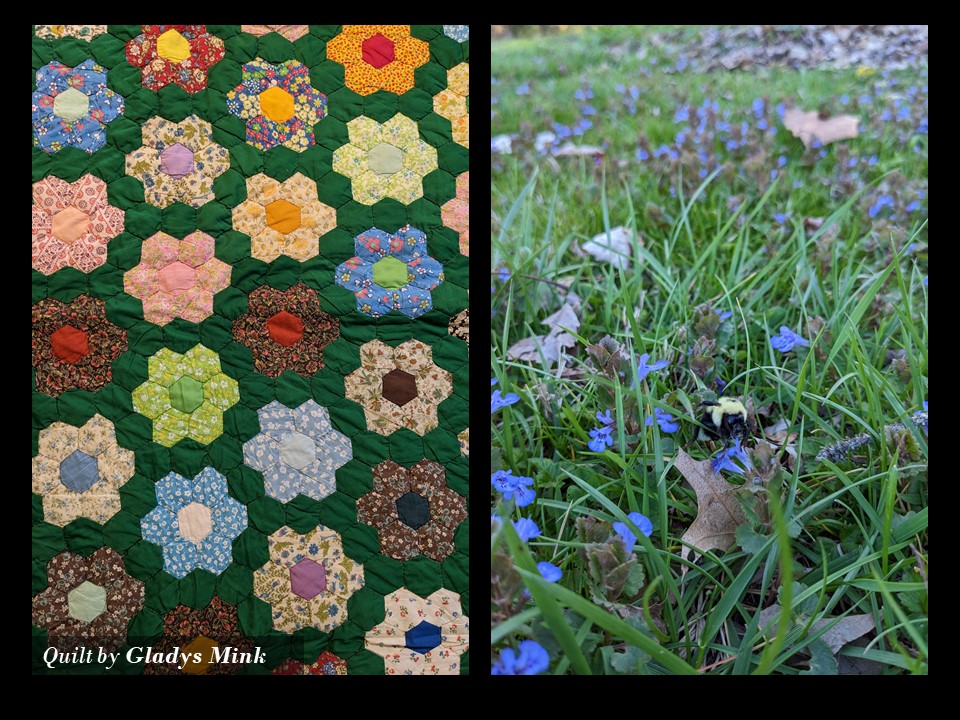
My proposal for escaping the Great American Lawn Boondoggle is The Quilt Lawn: A biodiverse, never sprayed, selectively mown, lawn where turf grass is interspersed with naturally occurring, short statured, flowering plants. The quilt lawn is similar in concept to a clover lawn, or tapestry lawn, with some important unique features. Specifically, the quilt lawn relies on a cool season grass “background” that is interspersed with patches of bright flowers from, naturally occurring, very short, flowering plants. The grass background will already be present in virtually all yards. This is the grass that has been established by the lawn service or homeowner and will include grasses that create a turf such as fescue and bluegrass. These grasses are important, especially in fall, winter, and early spring when the flowering plants are still dormant. There is no need to kill these grasses to create a quilt lawn, and there is no need to give up the basic function and visual appeal of your lawn! It can look neat and tidy. The overall approach is summarized in this Dayton Pecha Kucha talk and in this video:
How do you create a Quilt Lawn?
Step one: Free your mind! The American Lawn Boondoggle relies on a beauty standard that is based on English aristocratic values from the 1800s. The first step toward a quilt lawn approach is to “let yourself off the hook” for maintaining this highly un-natural, manicured, monoculture. If you can free your mind, and begin to think of maintenance of your “little slice of heaven” as an act of sustainability and caring, rather than chasing a “perfect look,” you are ready to create a quilt lawn.
Step two: You can do more for the environment simply by doing less. Stop spraying: Stop spraying insecticide. Stop spraying fertilizer. Call up the “lawn care” company and cancel your annual “treatment.” Pest control applications are quite expensive, and simply by refraining from application of these chemicals, homeowners can save hundreds of dollars a year and have a positive effect on the environment.
Step three: Mow less often. Again, you can do more for the environment simply by doing less. Scientific evidence indicates that less frequent mowing is better for biodiversity. Mowing once every three weeks can significantly increase lawn biodiversity. This can save the homeowner money, on average around $100 for each mowing event. If the homeowner mows their own lawn, intentionally reducing mowing frequently can give that individual a lot of extra time. Also, if possible, the homeowner can consider switching from a gasoline mower to an electric mower, which is better for the environment. The Quilt Lawn is meant to be a lawn, so it requires mowing; however, once you stop spraying fertilizer an allow the lawn to become more diverse, you will need to mow less often. The average homeowner spends nearly 400 hours mowing over the course of their life, and a Quilt Lawn approach will give you some of that time back.
Step four: Spontaneous biodiversity. In the American Midwest, once a homeowner stops spraying poisons, the biodiversity of their lawn will naturally increase. The poisons that are applied to conventional lawns are specifically designed to kill all plants except European turf grass. Many plants live in the Midwest that will volunteer to inhabit a lawn that is being mowed regularly. These include flowering plants like clovers (Trifolium), mints (e.g., Prunella), wild strawberry (Fragaria), sorrel (Oxalis) and, of course, dandelions (Taraxacum; dandelions are good for the environment and are a highly nutritious food!). As these species begin to appear in your lawn it will get more diverse, and like all ecosystems, as your lawn gets more diverse, it will become more resistant to stressors. These plants will flower at different times in different colors providing opportunities for pollinators, and making your quilt lawn increasingly beautiful.
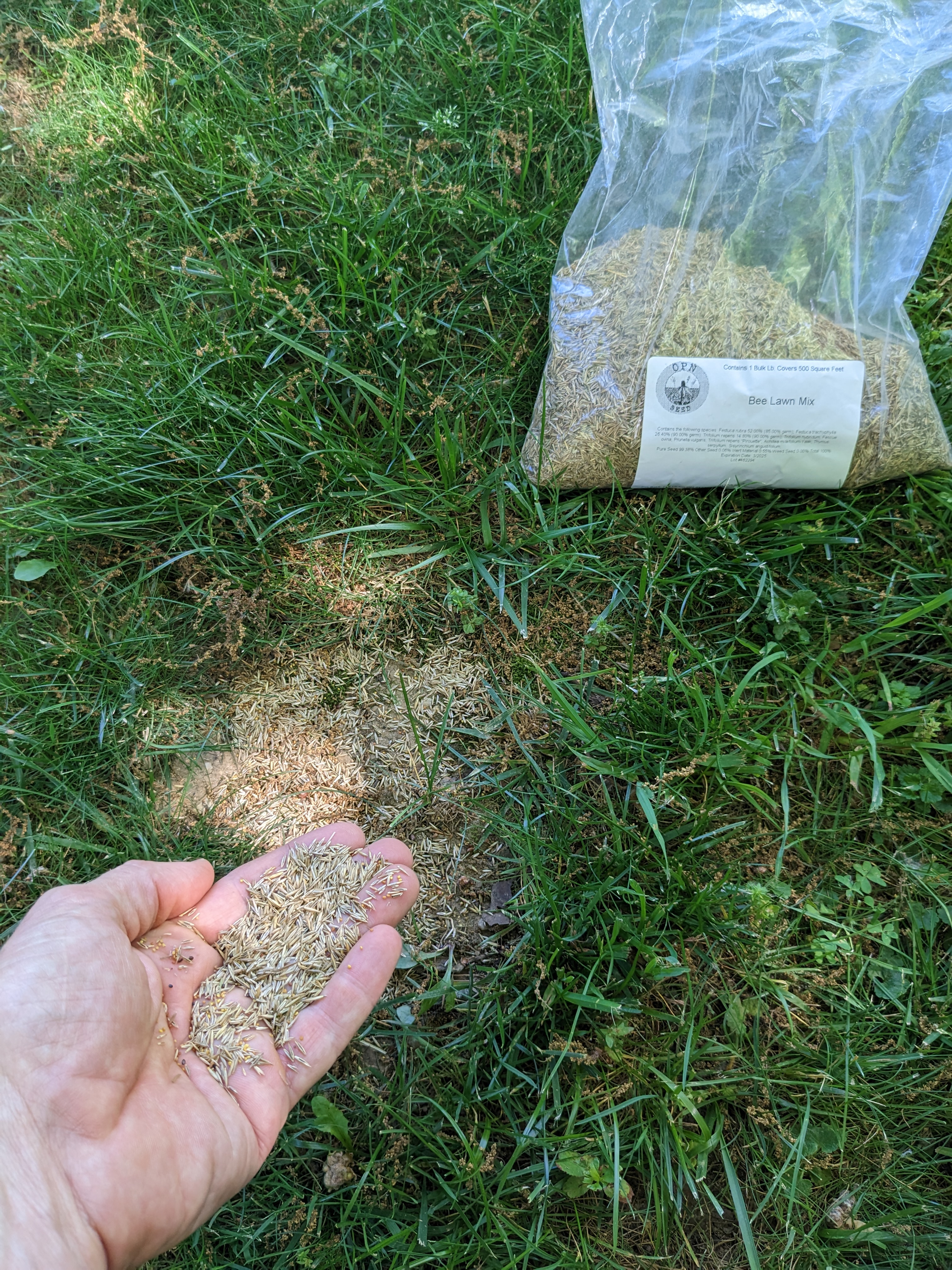
Step five: Enjoy! Creating a quilt lawn should be an enjoyable experience. If you feel uncomfortable about how your neighbors might react, you can only pursue the quilt lawn idea in the rear of your home. If you get excited and want to go further you can over-seed your current lawn with a diverse seed mix. For example, in the cool spring weather you can add seeds, such as the bee lawn mix from Ohio Prairie Nursery, to any bare patches that form.
One exciting thing about a quilt lawn is that you can welcome nature into your lawn, while still maintaining much of the basic look and function of a conventional lawn. It should be mown as needed to maintain the height and look you find appealing. A quilt lawn can be a place where you play cornhole or your kids can kick a soccer ball. Ultimately, by transitioning from a turf grass monoculture to a quilt lawn, you can save money, save time, have fun, while having a significant positive effect on the environment.

Bring your Green!
If you are excited about Quilt Lawns and ready to get started, you can get points in the Dayton Regional Green Bring your Green Challenge! Learn more about sustainability and join the community here: LINK
Quilt Lawn Resources
How to get started in the Miami Valley
Ohio Prairie Nursery – Lawn alternative seed mixes
Backyard Wildlife – Ohio Department of Natural Resources
Garden for Wildlife – National Wildlife Federation
Articles
“Weeds” can be helpful to humans
How to stand up to your HOA for a more sustainable lawn
Fertilizers can pollute groundwater
Positive effects of dandelions
She ripped up her manicured lawn
Lawn maintenance and climate change
Grass lawns are an ecological disaster
Sustainable lawn care techniques
Alys Fowler on laid-back gardening
Creeping thyme as a lawn plant
Pesticides as a factor in Parkinson’s Disease
Organizations that Support Alternative Approaches to Lawns
Books
Bringing Nature Home – Doug Tallamy
Lawns into Meadows – Owen Wormser
 The McEwan Laboratory