PhD in Biology
Michaela J. Woods
PhD, Biology (2023)
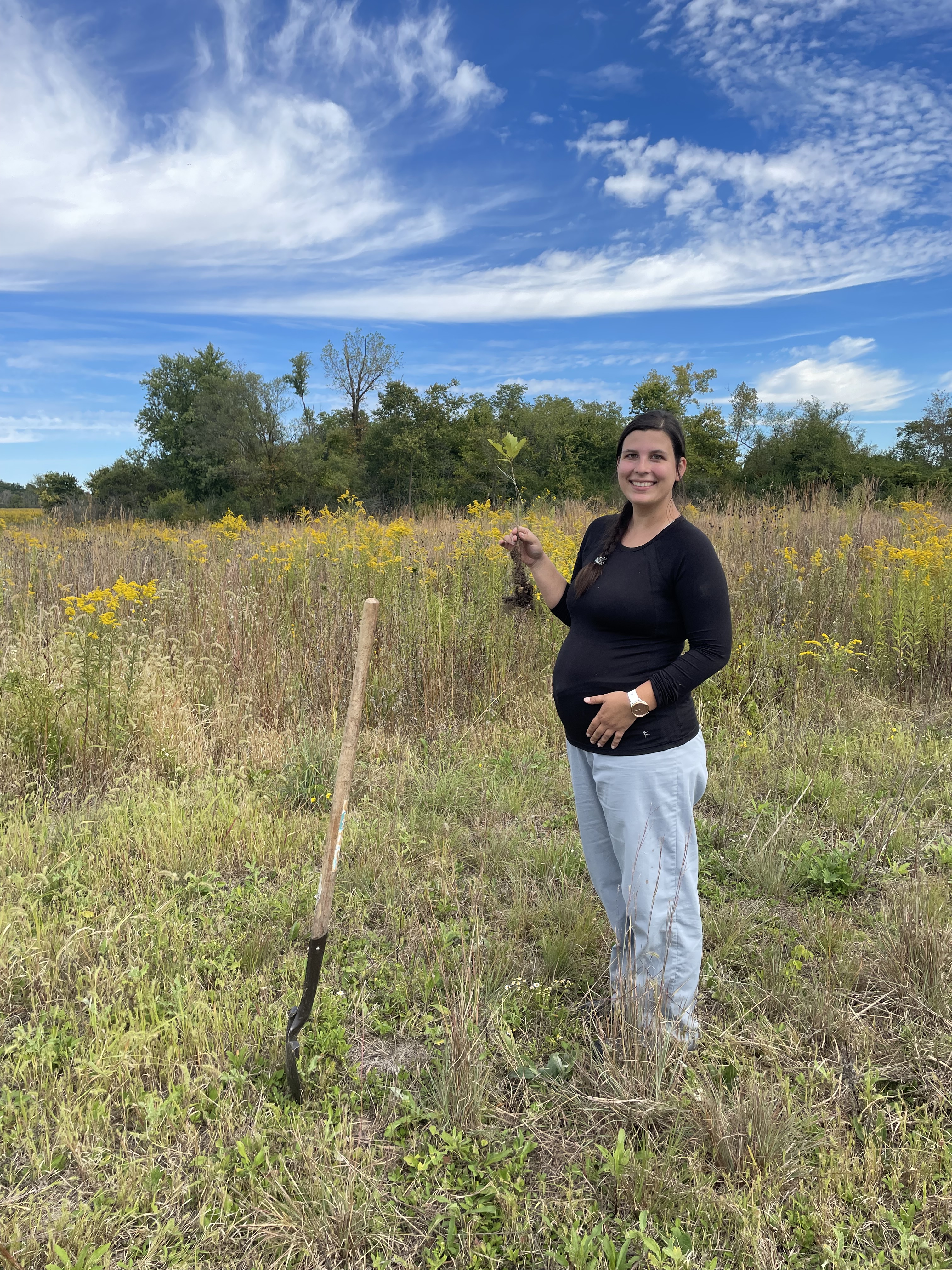
Michaela completed her BS in Biological Sciences at Wright State University in 2016 and her MS in Biological Sciences (December 2018) also at Wright State University. During her MS Michaela focused on soil ecology in relationship to Amur honeysuckle invasion in Dr. Megan Rua’s lab. As a PhD student in the McEwan Lab Michaela investigated the interconnections between soil biology, plant invasion, and ecological restoration in Midwestern Forests. She was particularly interested in collaboration with the Five Rivers Metroparks which manages 16,000+ acres of natural areas in the Dayton Area.
Michaela graduated and joined the lab of Dr. Jeremy Lichstein at the University of Florida as a postdoc where she used code based analysis in C++ to model tree demography at continental scales.
Michaela’s Dissertation: LINK
Michaela’s Publications: LINK
Publication(s) from dissertation work:
Woods, M.J., D. Schaeffer, J.T Bauer and R.W. McEwan. 2023. Pyrus calleryana exudates reduce germination of native grassland species, suggesting the potential for allelopathic effects during ecological invasion. PeerJ 11:e15189. Open Access: https://doi.org/10.7717/peerj.15189
Woods, M.J., G. Dietsch and R.W. McEwan. 2022. Callery pear invasion in prairie restorations is predicted by proximity to forest edge, not species richness. Biological Invasions 24: 3555–3564. LINK.
Woods, M.J., S.J. Frankenberg, J.R. Juodvalkis, M.C. Lloyd, M. Cobb and R.W. McEwan. 2022. Oak seedling performance and soil development across a forest restoration chronosequence following agriculture in the American Midwest- a greenhouse experiment. Restoration Ecology 30(5): e13587 LINK.
Woods, M.J., G.K. Attea and *R.W. McEwan. 2021. Resprouting of the woody plant Pyrus calleryana influences soil ecology during invasion of grasslands in the American Midwest. Applied Soil Ecology 166: 103989. LINK.
Cobb, M., M.J. Woods and R.W. McEwan. 2020. Assessing seed handling processes to facilitate a community-engaged approach to regional forest restoration. Forests 11, 474. Open access: https://doi.org/10.3390/f11040474
Woods, M.J., M. Cobb, K. Hickle and *R.W. McEwan. 2019. Assessing the efficacy of seedling planting as a forest restoration technique in temperate hardwood forests impacted by invasive species. Forests 10: 699. Open Access: https://doi.org/10.3390/f10080699
Julia I. Chapman
PhD, Biology (2018)

Julia completed her MS in the lab in 2012 (see below) and after working as an instructor in the Department of Biology, rejoined the lab to pursue her PhD. Her work in the lab centered on understanding the relationship(s) between taxonomic, functional and phylogenetic diversity in forests of North America and Taiwan.
Julia Chapman (M.S., Ph.D.) came to the lab from the Department of Environmental and Plant Biology at Ohio University where she worked with Dr. Phil Cantino on the ecology and control of garlic mustard. An avid and accomplished botanist, and banisher of invasive species, she was a 2009 winner of the Botanical Society of America’s Young Botanist Award.
Julia’s contact information
Website: https://jichapman.wordpress.com
Email: jichapman01@gmail.com
Publications: Google Scholar
Thesis: LINK
Dissertation: LINK
Publication(s) from dissertation work:
Chapman, J.I. and R.W. McEwan. 2018. Topography as a driver of functional and evolutionary patterns in an old-growth Appalachian forest: Lucy Braun you were right! In W. Keeton and A. Barton (Eds). Eastern Old-Growth Forests: Ecology and Recovery in a Rapidly Changing World. Island Press. Washington, D.C., USA.
Chapman, J.I. and *R.W. McEwan. 2018. The role of environmental filtering in structuring Appalachian tree communities: Topographic influences on functional diversity are mediated through soil characteristics. Forests 9: 19. Open Access: https://doi.org/10.3390/f9010019
Chapman, J.I. and *R.W. McEwan. 2016. Thirty years of compositional change in an old-growth temperate forest: The role of topographic gradients in oak-maple dynamics. PLoS ONE 11(7): e0160238. Open Access: https://doi.org/10.1371/journal.pone.0160238.
Chapman, J.I., A.L. Myers, A. J. Burky, and *R.W. McEwan. 2015. Edge effects, invasion, and the spatial pattern of herb-layer biodiversity in an old-growth deciduous forest fragment. Natural Areas Journal 35: 439-451. LINK.
Rachel E. McNeish
PhD, Biology (2016)
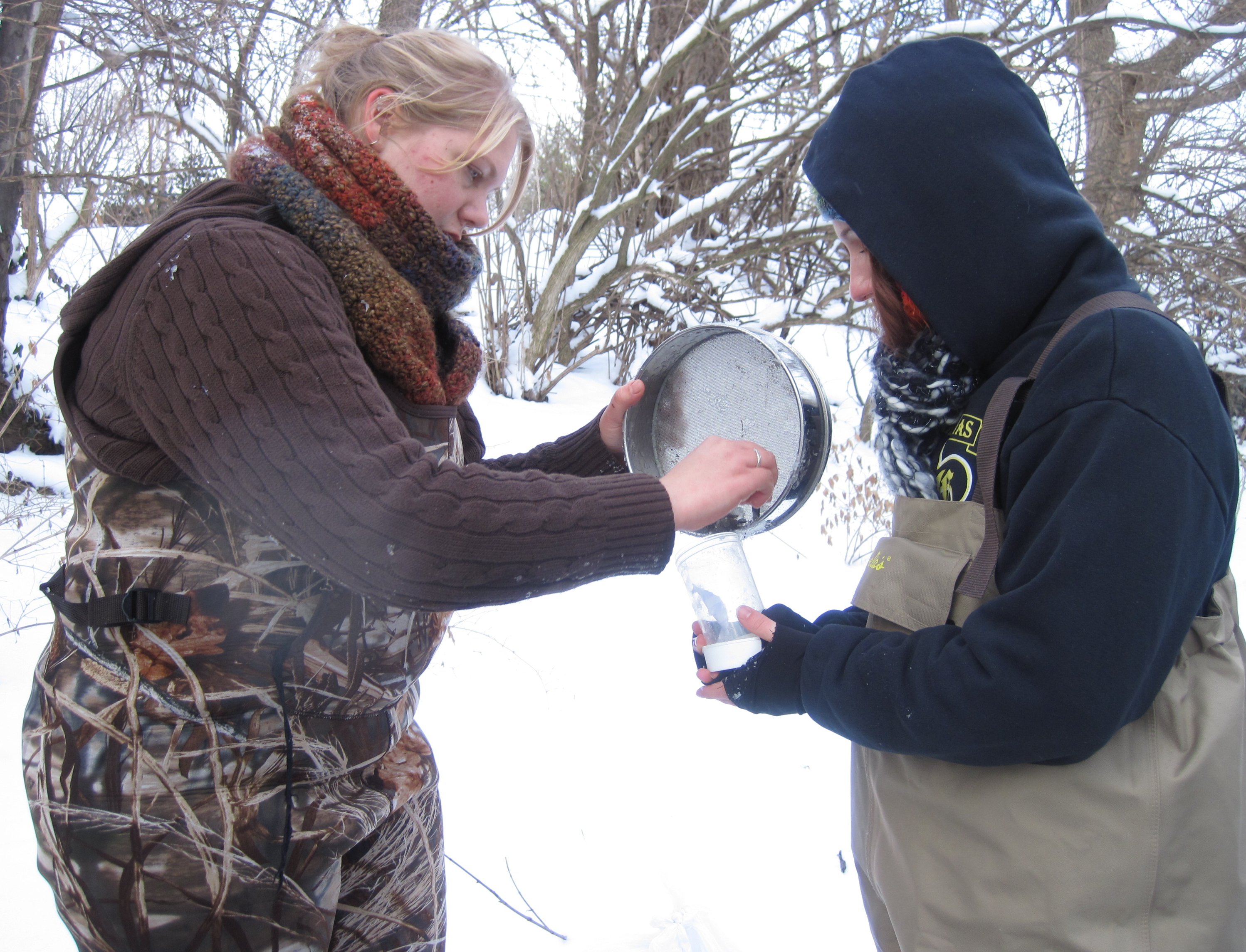
Rachel McNeish (M.S., PhD) is an aquatic ecologist by training, and worked on numerous research projects as an undergraduate at Millersville University in the lab of Dr. John Wallace. Her work in the McEwan lab focused on understanding the links between terrestrial and aquatic habitats, and she used the invasion of local forests by an exotic shrub (Amur honeysuckle; Lonicera maackii) as her model system. Rachel completed her MS in Biology in the McEwan lab in 2011 (see below) and remained at the University of Dayton for her PhD working in our lab. Rachel graduated with her PhD in May of 2016 and accepted a position as a Post-doctoral Associate at Loyola University in Chicago. Rachel is presently a faculty member at California State University, Bakersfield.
Thesis: LINK
Dissertation: LINK
Email: rachel.e.mcneish@gmail.com
Publication(s) from dissertation work:
McNeish, R.E., M.E. Benbow and R.W. McEwan. 2018. Riparian invasion of Lonicera maackii influences throughfall chemistry and rainwater availability. Ecological Research 33: 1021-1030. LINK.
McNeish, R.E., M.E. Benbow and R.W. McEwan. 2017. Removal of an invasive shrub (Lonicera maackii) from a headwater stream riparian zone shifts taxonomic and functional composition of the aquatic biota. Invasive Plant Science and Management 10: 232-246. Open Access: https://doi.org/10.1017/inp.2017.22
McNeish, R.E., E.M. Moore, M.E. Benbow and R.W. McEwan. 2015. Removal of the invasive shrub, Lonicera maackii, from riparian forests influences headwater stream biota and ecosystem function. River Research and Applications 31: 1131-1139. LINK.
McNeish, R.E. and R.W. McEwan. 2016. A review on invasion ecology of Amur honeysuckle (Lonicera maackii, Caprifoliaceae), a case study of impacts at multiple ecological scales. Journal of the Torrey Botanical Society 143: 367-385. Open Access: https://doi.org/10.3159/TORREY-D-15-00049.1
McNeish, R.E., E.M. Moore, M.E. Benbow and R.W. McEwan. 2015. Removal of the invasive shrub, Lonicera maackii, from riparian forests influences headwater stream biota and ecosystem function. River Research and Applications 31: 1131-1139. LINK.
Jennifer Lang
PhD, Biology (2015)
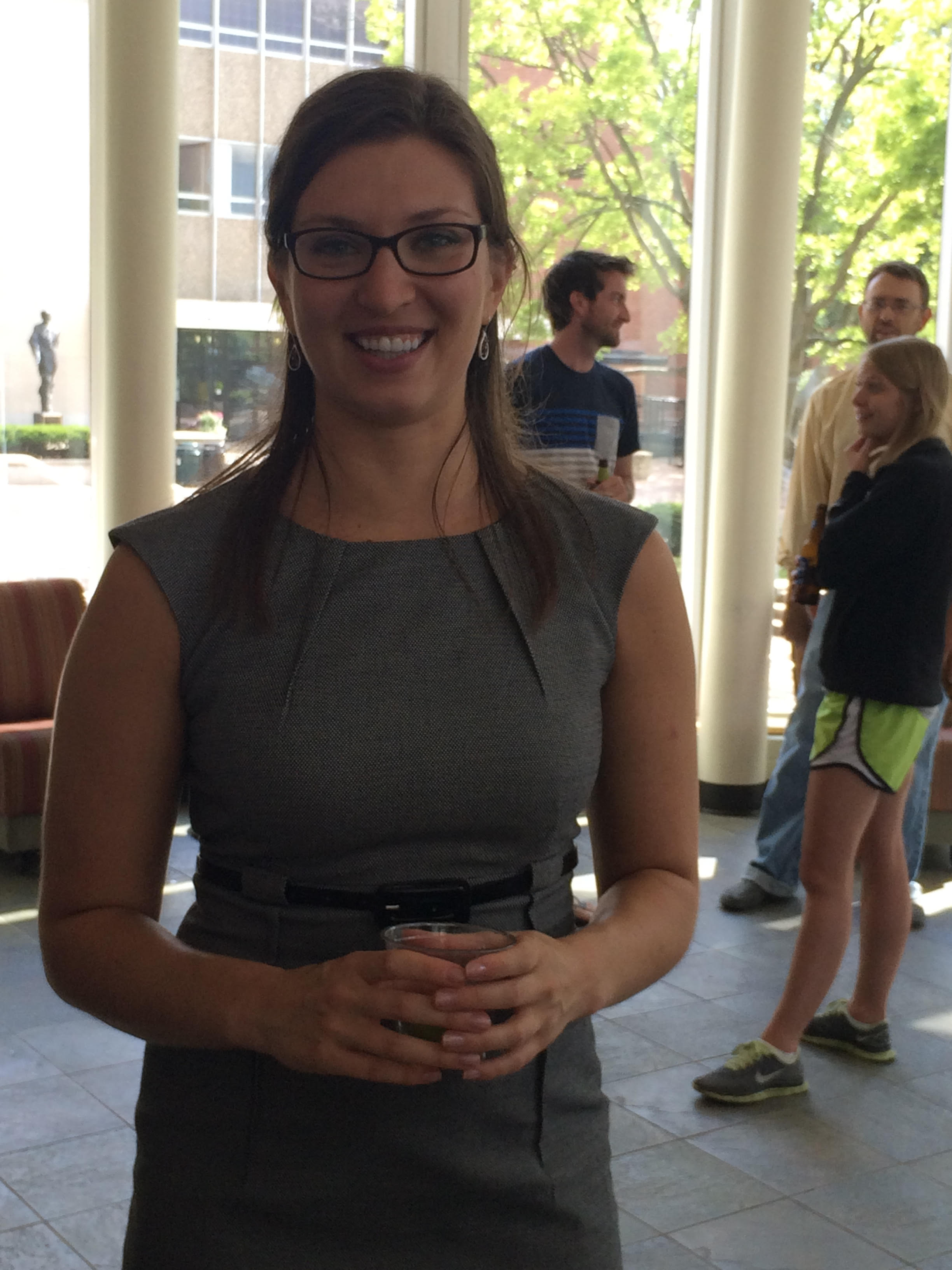
Jennifer was a PhD student in the lab who was originally in Dr. Eric Benbow’s lab before he departed UD for Michigan State University. Jen’s project focused on using stream biofilm communities as a model system for asking basic scientific/ecological questions. She implemented a series of field experiments and developed a suite of molecular tools to address the microbial ecology of these micro-ecosystems. She left UD to become a post-doc in the Lusis lab at UCLA
Linkedin: www.linkedin.com/in/langjenm/
Email: lang.jen.m@gmail.com
Dissertation:
Publication(s) from dissertation work in the lab:
Lang, J.L., R. Erb, J.L. Pechal, J.R.Wallace, R.W. McEwan, M.E. Benbow. 2016. Microbial biofilm community variation in flowing habitats: Potential utility as bioindicators of postmortem submersion intervals. Microorganisms 4, 1. Open Access: 10.3390/microorganisms4010001
Lang, J.L., R.W. McEwan and M.E. Benbow. 2015. Abiotic autumnal organic matter deposition and grazing disturbance effects on epilithic biofilm succession. FEMS Microbial Ecology 91: fiv060. Open Access: https://doi.org/10.1093/femsec/fiv060
Master of Science (MS) in Biology
Madelaine Gregory
Master of Science, Biology (2025)

Madelaine completed her B.S in Environmental Biology in 2022 at the University of Dayton. As an undergraduate, she worked as a lab technician and a project leader for a study on mycorrhizal colonization in bur oak seedlings in relation to seeding treatments and soil amendments. Maddie’s MS project focused on the restoration of soil following industrial agriculture using praire mixes and soil amendments. She was specifically interested in the interactions between carbon cycling enzymes, soil nutrients ,and the surrounding plant community.
Valerie Thurston
Master of Science, Biology (2024)
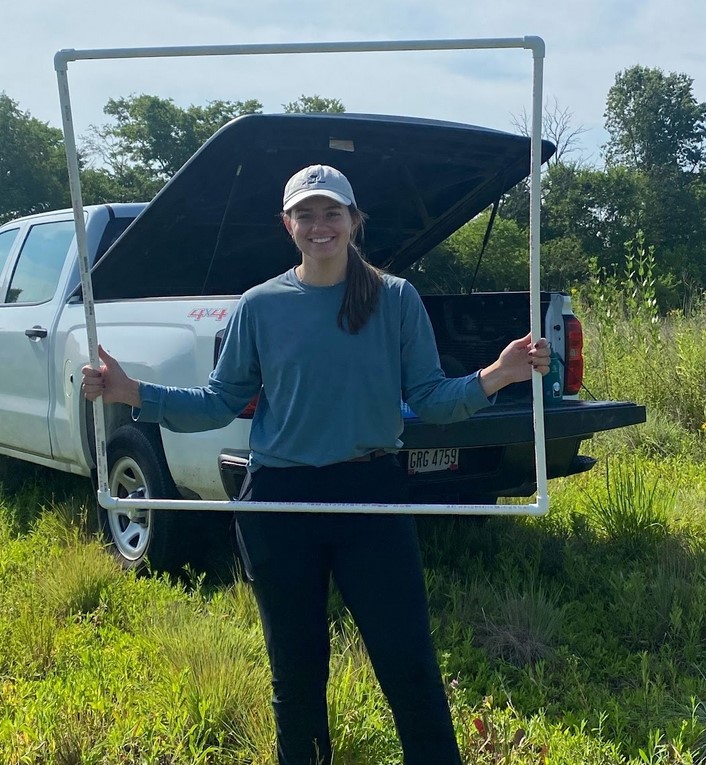
Val completed her degree in Environmental Biology here at the University of Dayton in and also worked on the University of Dayton Solar Prairie and in the McEwan lab as an undergraduate. As a MS student Valerie worked on a project funded by the Greenacres Foundation that focused on restoration of prairie vegetation in a post-agricultural field in southwestern Ohio.
In the summer of 2024 Valerie graduated and took a position with the Davey Resources Group.
Grace Attea
Master of Science, Biology (2023)
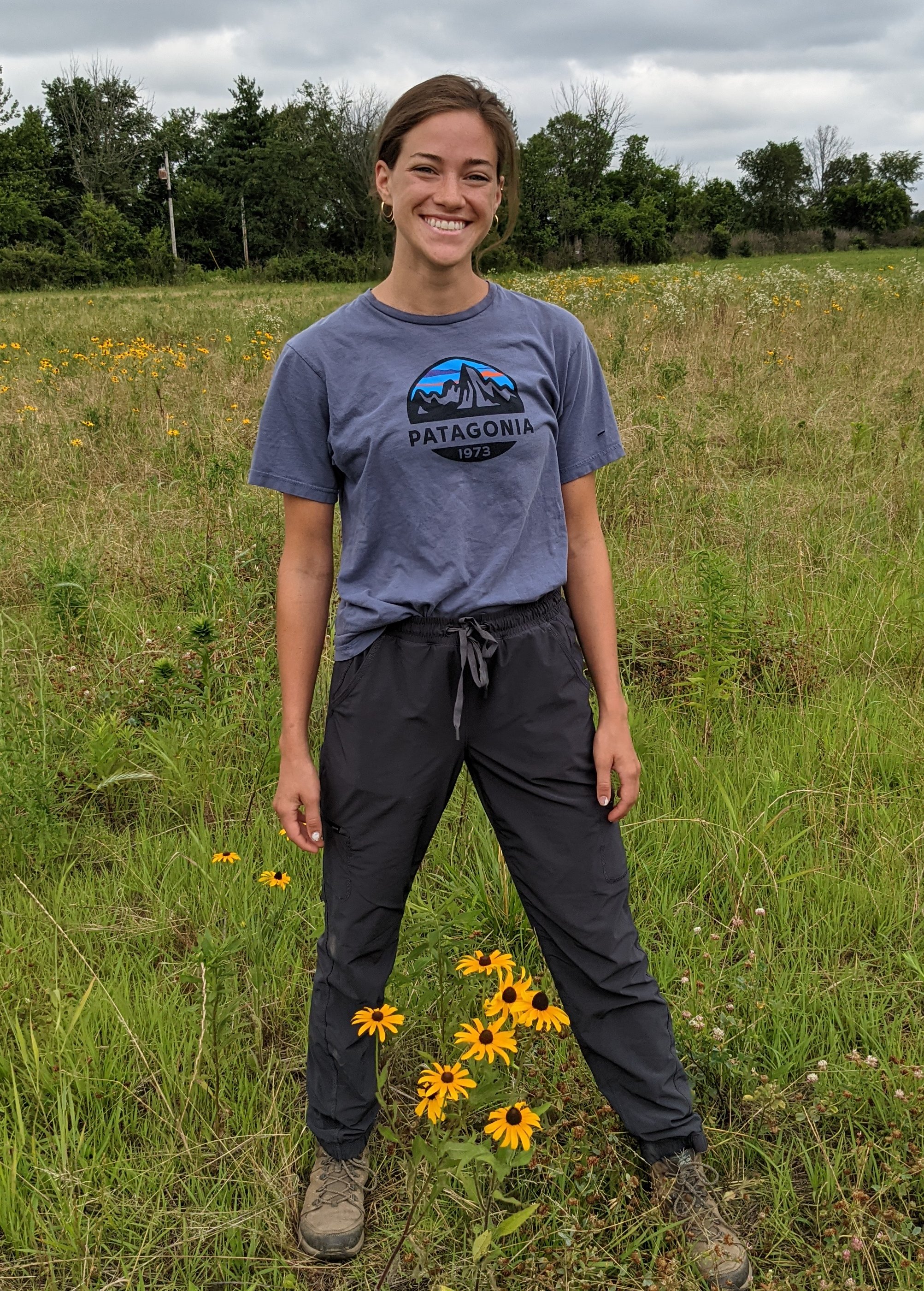
Grace completed her degree in Environmental Biology here at the University of Dayton in 2019 and also worked in the McEwan Lab as a postbac researcher. She made a triumphant return to the lab in the summer of 2021 and completed her thesis focused on long-term forest dynamics in Hueston Woods State Nature Preserve. Through diligent resampling of this old-growth beech-maple forest, Grace explored the geospatial and demographic patterns of woody vegetation change over several decades.
As of April 2023, Grace joined Dr. Sybil Gotsch’s Forest Ecophysiology Lab at the University of Kentucky as a lab technician.
Thesis: LINK
Peter Butterfield
Master of Science, Biology (2023)
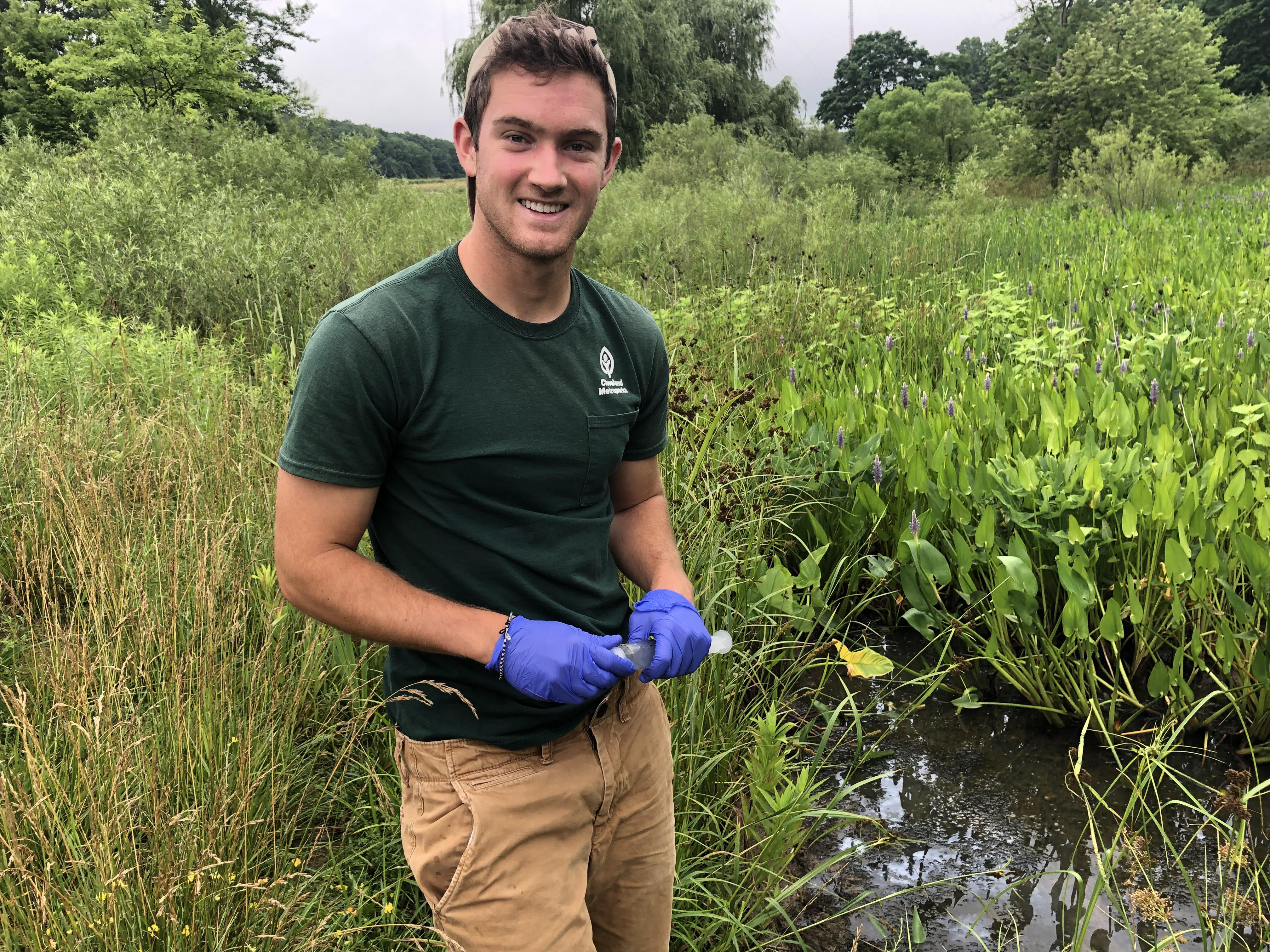
Peter graduated as a student in the Bachelor’s plus Master’s Program in the Department of Biology. This means that Peter completed his degree in Environmental Biology (BS) in 2021 while also launching a research based Master’s project. His MS research focused on long-term oak forest dynamics in relationship to disturbance processes including wildfire. The data Peter collected led to important insights about historic forest dynamic trends as well as current oak forest management strategies.
Upon completing his program, Peter accepted a job as a biological technician for the National Park Service at Yellowstone National Park.
Thesis: LINK
Meg Maloney
Master of Science, Biology (2021)
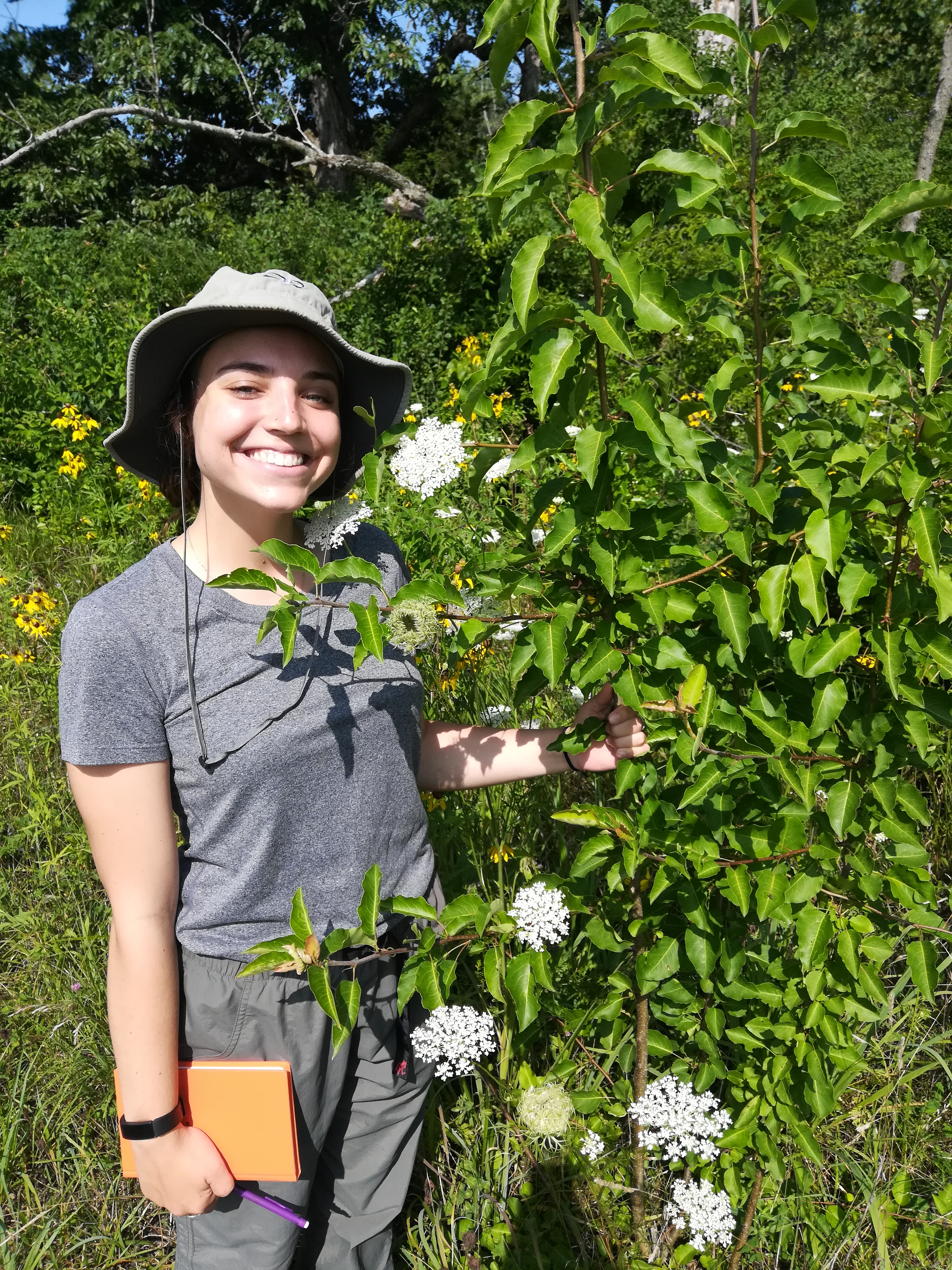
Meg was an undergraduate project leader and honors student in the lab who graduated with her BS in Environmental Biology and then headed to California to spend a year living in the redwoods and working as a naturalist educator (LINK). She rejoined the lab to work on a MS project focused on ecological restoration and habitat management in relationship to the invasion biology of Callery Pear. Her time at UD was 50% funded by the Hanley Sustainability Institute and she will also be working on a regional #resilience plan.
Thesis: LINK
Publication(s) from Masters Research in the lab:
Maloney, M.E., E.B. Borth, G. Dietch, M.C. Lloyd and R.W. McEwan. 2023. A trial of fire and ice: assessment of control techniques for Pyrus calleryana stems during grassland restoration in southwestern Ohio, USA. Ecological Restoration 41: 25-33. pen Access: https://muse.jhu.edu/pub/19/article/883911
Maloney, M.E., A. Hay, E.B. Borth and R.W. McEwan. 2022. Leaf phenology and freeze tolerance of the invasive tree Pyrus calleryana (Roseaceae) and potential native competitors. Journal of the Torrey Botanical Society 149: 273-279. Open Access: https://doi.org/10.3159/TORREY-D-22-00008.1
Sarah Frankenberg
Master of Science, Biology (2020)

Sarah Frankenberg, scientist and adventurer, was an undergraduate project leader in the lab, graduating with a BS in Biology in 2015. She worked full time in the lab as a technician that summer and then launched a cross country Ecological Odyssey. She worked as a technician in the laboratory of Dr. Kelly Dorgan at Dauphin Island Sea Lab. Then worked as a Biological Science Technician focused on vegetation at Yellowstone National Park. Finally, she made her way to Lake Mead where she worked at Song Dog Native Plant nursery. Sarah made a triumphant return to the lab as a graduate student in Summer of 2018! Her MS research focuses on plant-fungal relationships and how they drive plant community dynamics in the Siberian Arctic. Yep, the SIBERIAN ARCTIC. This project is part of our funded NSF project and Sarah will be an RA on the project through 2020.
Thesis: LINK
Eric Borth
Master of Science, Biology (2019)
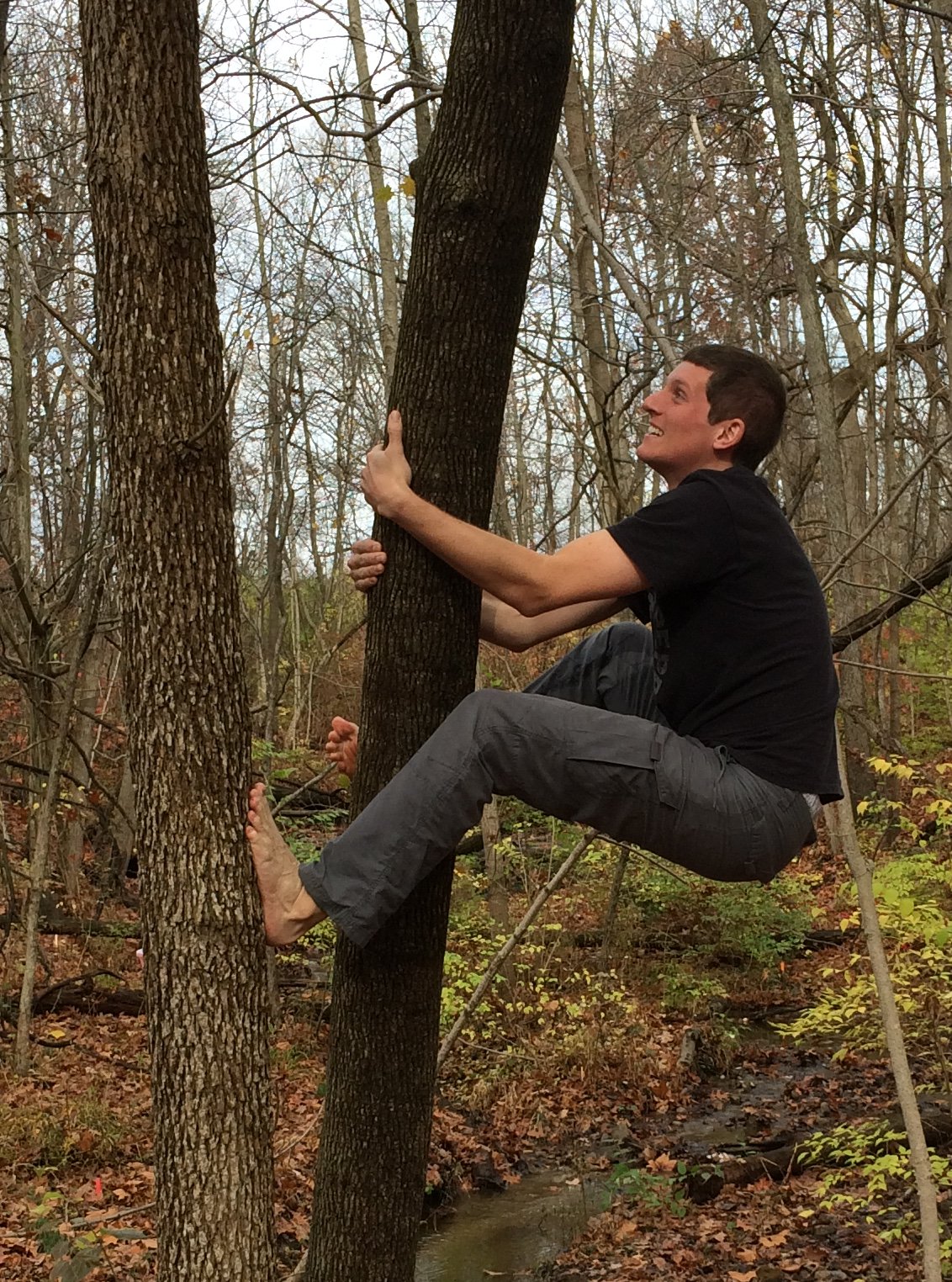
Eric was an Undergraduate Project Leader and Honors Student in the lab, graduating with a BS in Biology in 2017. As an undergraduate he worked in the lab full time in the summer for several years ultimately generating a fantastic data set (see below publications!). Eric transitioned in the lab to a MS student and completed a project focused on forest dynamics and fire ecology in the Siberian Arctic. Yep, the SIBERIAN ARCTIC!
Thesis: LINK
Publication(s) from Masters Research in the lab:
Borth, E.B., H. A. Alexander, N. Zimov and *R.W. McEwan. 2023. Seed sources and safe sites as drivers of Larix cajanderi regeneration following fire in the Siberian Arctic. EcoSphere 14: e4617. Open Access: https://doi.org/10.1002/ecs2.4617
Erin Rowekamp
Master of Science, Biology (2017)
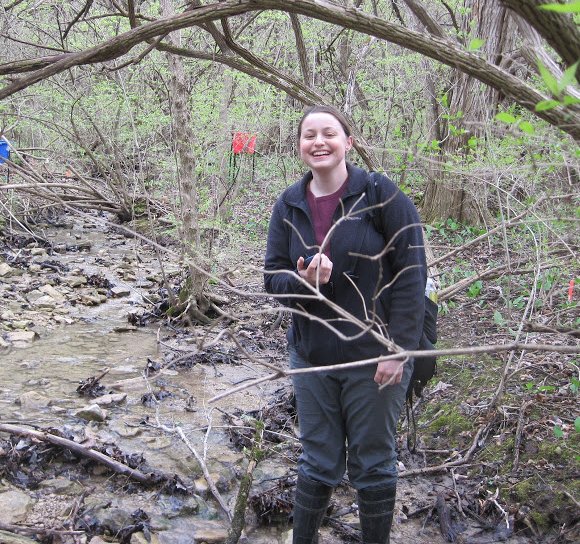
Erin Rowekamp (B.S.) was an MS student in the lab who did her undergraduate work at Thomas More College. Her project in the lab focused on how the invasion of Lonicera maackii into headwater stream riparian zones influences the linkage between the terrestrial environment and biology of the stream system. After graduating UD she took a position with the Five Rivers Metroparks in Dayton and began teaching GIS at Thomas More College.
Thesis: LINK
Publication(s) from work in the lab:
Rowekamp, E.C., J.I. Chapman and R.W. McEwan. 2020. Assessing the influence of riparian invasion by the shrub Lonicera maackii on terrestrial subsidies to headwater streams. Acta Oecologica 105: 103580. LINK
Jessica Davis
Master of Science, Biology (2014)
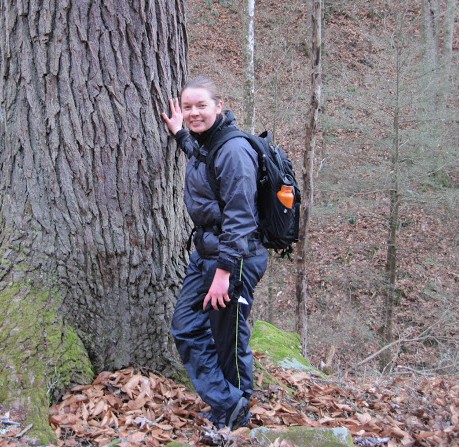
Jessica was a MS student in the lab who has a BS in Biology from Marian University. Jessica’s initial interest after graduating from her undergraduate program was in Wildlife Medicine and she spent a year at Purdue University in the vet school including a 1 month stint in Africa. She decided, however, that the basis of the biodiversity crisis is ecological and thus it requires an ecological solution (rather than a medical one). For this reason she joined the lab and developed a project that focuses on biodiversity and ecosystem function in forests. Presently, she serves as the Chief Sustainability Officer of the Indiana University System.
Jessica’s: LinkedIn
Thesis: LINK
Publication(s) from work in the lab:
Davis, J.G., J.I. Chapman, S-Y Wu and R.W. McEwan. 2015. Spatiotemporal dynamics of coarse woody debris in an old-growth temperate deciduous forest. Forest Science 61: 680-688. LINK
Julia Chapman
Master of Science, Biology (2012)

Julia Chapman came to the lab from the Department of Environmental and Plant Biology at Ohio University where she worked with Dr. Phil Cantino on the ecology and control of garlic mustard. An avid and accomplished botanist, and banisher of invasive species, she was a 2009 winner of the Botanical Society of America’s Young Botanist Award. Julia completed her MS degree in the lab in 2012, then worked for a year as an instructor in Biology and then returned to complete her PhD (see above).
Thesis: LINK
Publication(s) from MS work in the lab:
Chapman, J.I. and R.W. McEwan. 2013. Spatiotemporal dynamics of α and β diversity across topographic gradients in the herbaceous layer of an old-growth deciduous forest. Oikos 122: 1679-1686. LINK.
Chapman, J.I. and *R.W. McEwan. 2012. Tree regeneration ecology of an old-growth central Appalachian forest: Diversity, temporal dynamics, and disturbance response. Journal of the Torrey Botanical Society 139: 194-205. LINK.
Chapman, J.I., K.L. Perry and *R.W. McEwan. 2012. Changing flora of an old-growth mesophytic forest: Previously undetected taxa and first appearance of non-native invasive species. Journal of the Torrey Botanical Society 139: 206-210. LINK.
Rachel McNeish
Master of Science, Biology (2011)
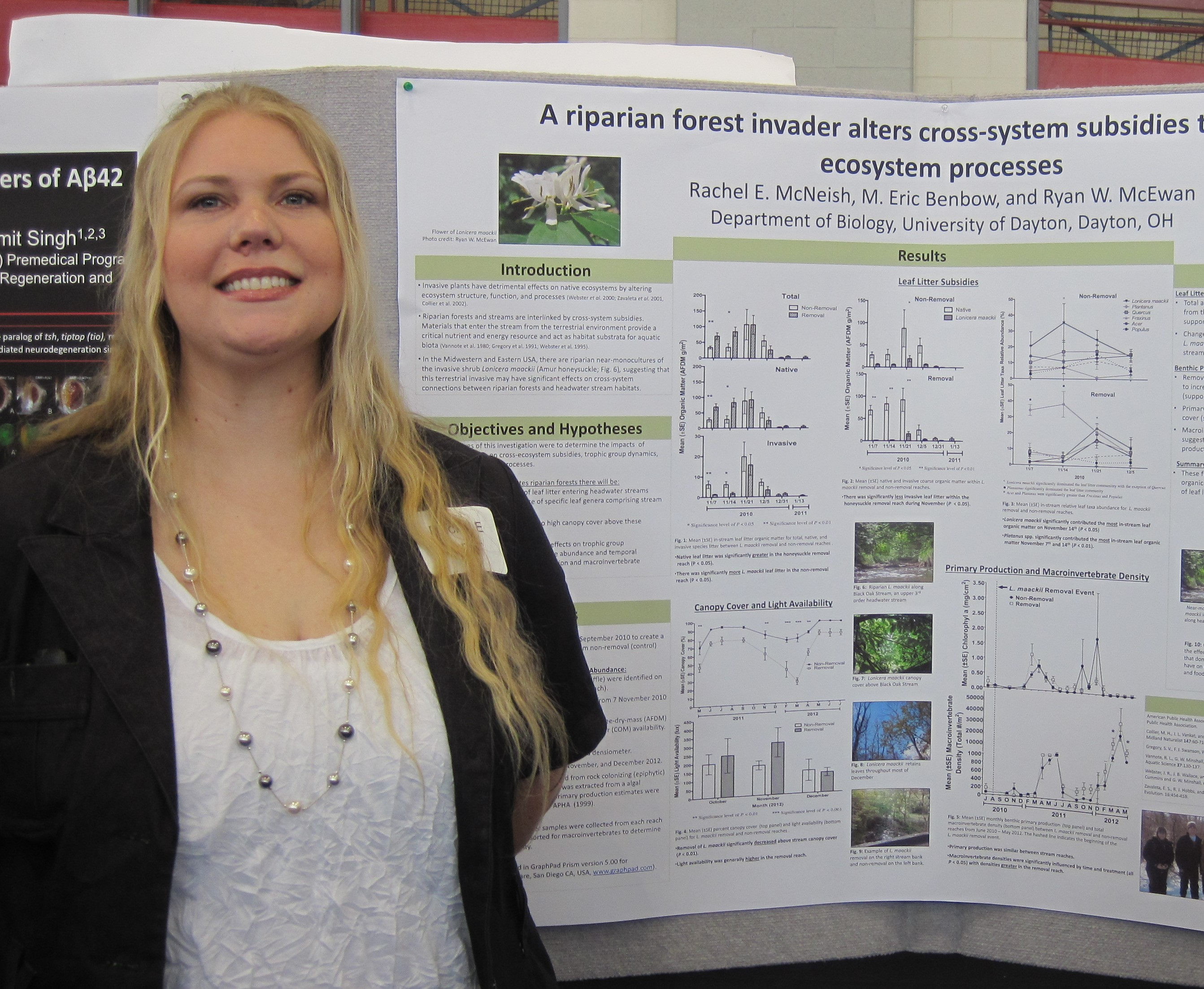
Rachel McNeish (M.S., PhD) is an aquatic ecologist by training, and worked on numerous research projects as an undergraduate at Millersville University in the lab of Dr. John Wallace. Her work in the McEwan lab focused on understanding the links between terrestrial and aquatic habitats, and she used the invasion of local forests by an exotic shrub (Amur honeysuckle; Lonicera maackii) as her model system. Rachel completed her MS in Biology in the McEwan lab in 2011 and remained at the University of Dayton for her PhD working in our lab (see above).
Thesis: LINK
Publication(s) from MS work in the lab:
McNeish, R.E., E.M. Moore, M.E. Benbow and R.W. McEwan. 2015. Removal of the invasive shrub, Lonicera maackii, from riparian forests influences headwater stream biota and ecosystem function. River Research and Applications 31: 1131-1139. LINK.
Sean Goins
Master of Science, Biology (2010)
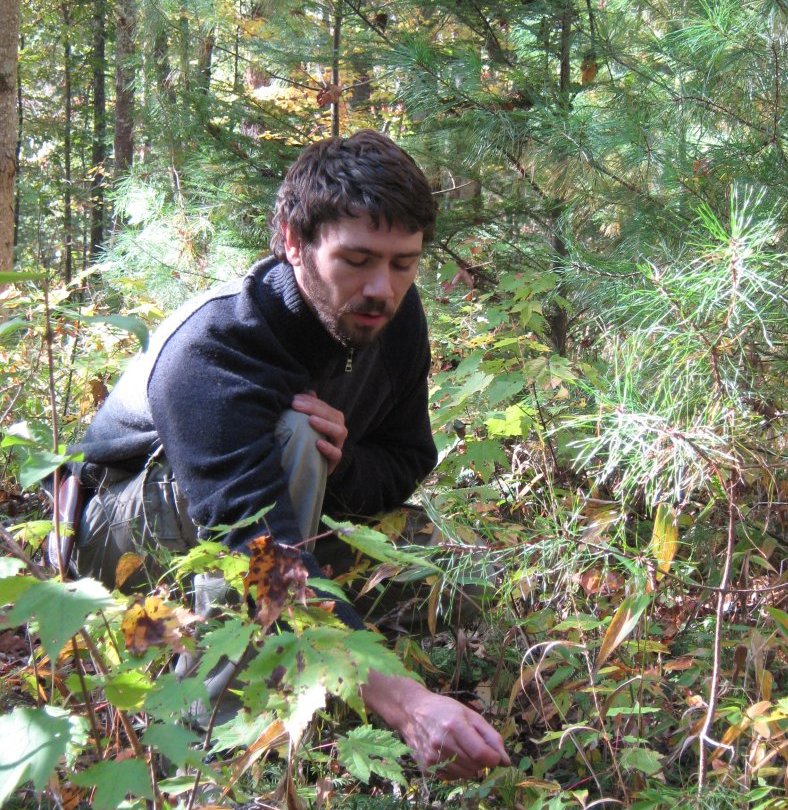
Sean was a MS student in the lab who did his undergrad work in the Department of Biological Sciences at Northern Kentucky University. He also worked with the NKU Center for Applied Ecology. In the lab Sean’s project focused on forest dynamics at Drew Woods- using dendroecology (the study of tree-rings to assess ecological change) and plot sampling to investigate forest dynamics. Sean left the lab to join the Ohio Department of Agriculture project on Asian long-horned beetle.
Publication(s) from work in the lab:
Goins, S.M., J.I. Chapman, and R.W. McEwan. 2013. Dynamics and disturbance in an old-growth forest remnant in western Ohio. Natural Areas Journal. 33: 384-394.
Thesis: LINK
Staff
Anna Pallone
Lab Manager & Research Scientist (2023-2024)
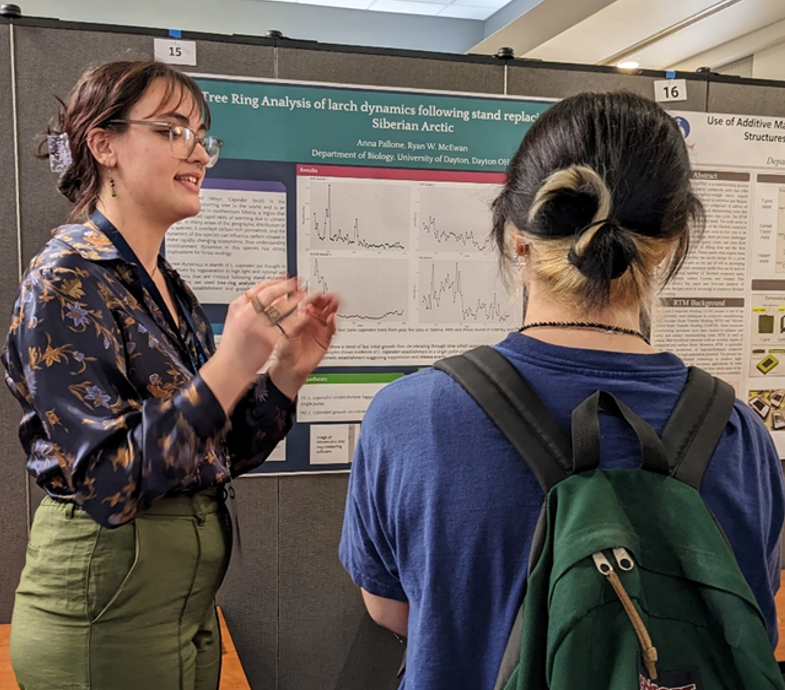
Anna was a project leader in the McEwan lab who worked on our NSF-funded project looking at long-term patterns of Larch tree stand establishment in post-fire environments in Siberia. After receiving the Dean’s Summer Fellowship in 2022, Anna spent her summer on campus dating wood samples from a historic log cabin in Carillon Park, practicing dendrochronological techniques. During the summer of 2023 Anna worked full time in the lab supporting field work and continuing her Siberia project. She graduated with her BS Degree in Environmental Biology from the University of Dayton in December of 2023 and joined the lab as a full-time lab manager.
M. Cait Lloyd
Lab Manager & Research Scientist (2021-2023)
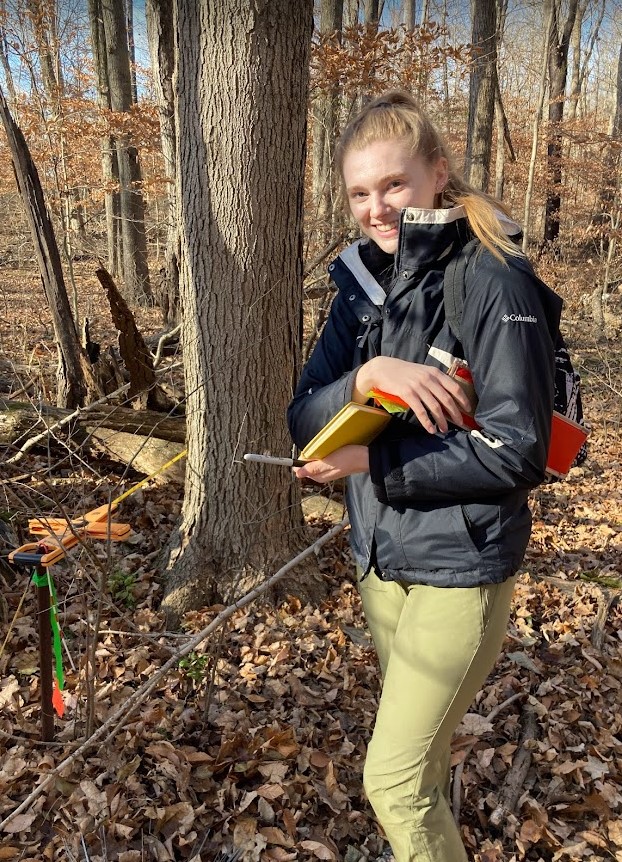
Cait graduated from the University of Dayton with an Environmental Biology Degree in May of 2019, worked as a technician in the lab in 2020 then made a triumphant return to the lab as lab manager in 2021. Cait was absolutely central to all lab activities and was an engine of positive vibes and function in the lab throughout her time in the lab. She left the lab to take a full time position at the Ohio Environmental Protection Agency.
Publication(s) from work in the lab:
Maloney, M.E., E.B. Borth, G. Dietch, M.C. Lloyd and R.W. McEwan. 2023. A trial of fire and ice: assessment of control techniques for Pyrus calleryana stems during grassland restoration in southwestern Ohio, USA. Ecological Restoration 41: 25-33.
Woods, M.J., S.J. Frankenberg, J.R. Juodvalkis, M.C. Lloyd, M. Cobb and R.W. McEwan. 2022. Oak seedling performance and soil development across a forest restoration chronosequence following agriculture in the American Midwest- a greenhouse experiment. Restoration Ecology 30(5): e13587 LINK.
Grace Attea
Post-baccalaureate Research Scientist (2020)
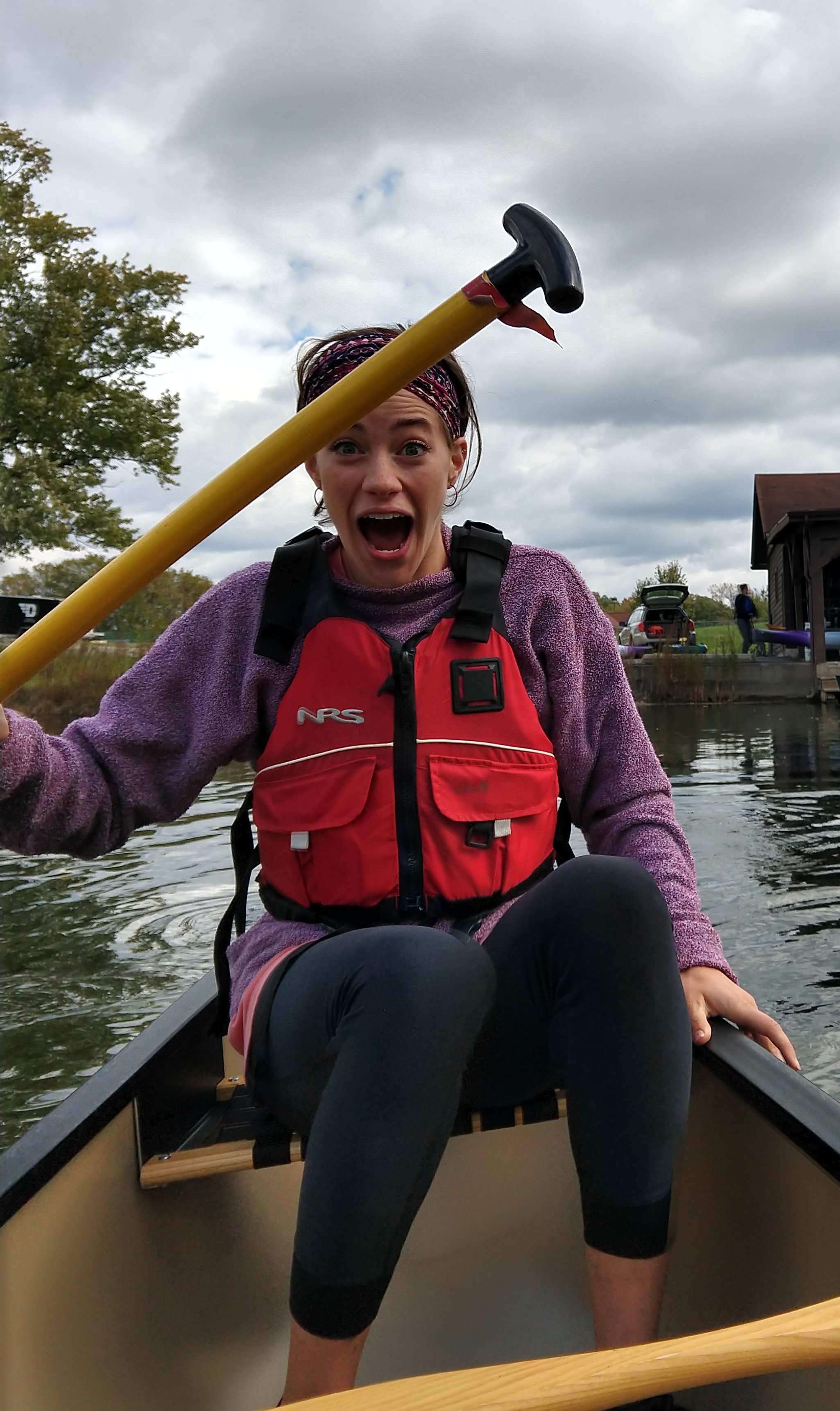
Grace was an Undergraduate Project Leader in the lab who transitioned into being a researcher in the lab when she graduated. She took on a number of important responsibilities. She worked on a project focused on Callery pear invasion and is also led a data management project with the City of Dayton Water Department. She was instrumental in re-starting tree-ring research in the lab via work on a grant with the US Forest Service. Grace is interested in fungi, soil processes and ecological restoration.
Publication(s) from work in the lab:
Woods, M.J., G.K. Attea and *R.W. McEwan. 2021. Resprouting of the woody plant Pyrus calleryana influences soil ecology during invasion of grasslands in the American Midwest. Applied Soil Ecology 166: 103989. LINK.
Cait Lloyd
Post-baccalaureate Research Scientist (2020)
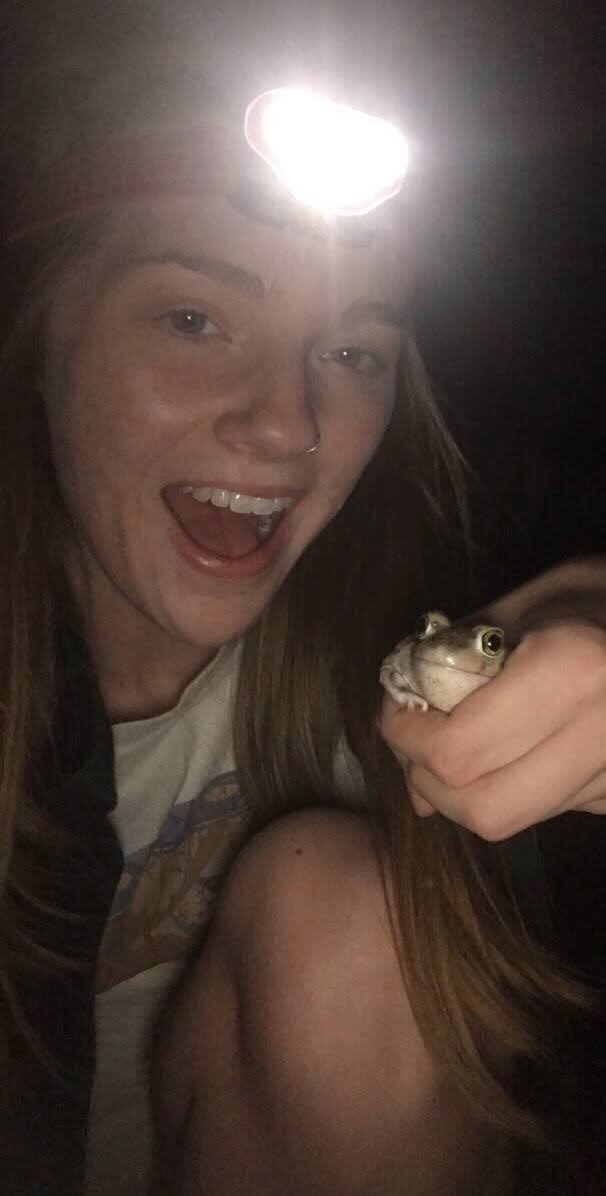
Cait graduated from the University of Dayton with an Environmental Biology Degree in May of 2019, then decided she wanted to get involved in research to get some experience and connected with lab as a researcher. She took on a number of important responsibilities. She worked on a project focused on Callery pear invasion, engaged in a data management project with the City of Dayton Water Department and helped re-launch tree-ring research in the lab.
Kevin W. Custer, PhD
Post Doctoral Associate (2014-2017)
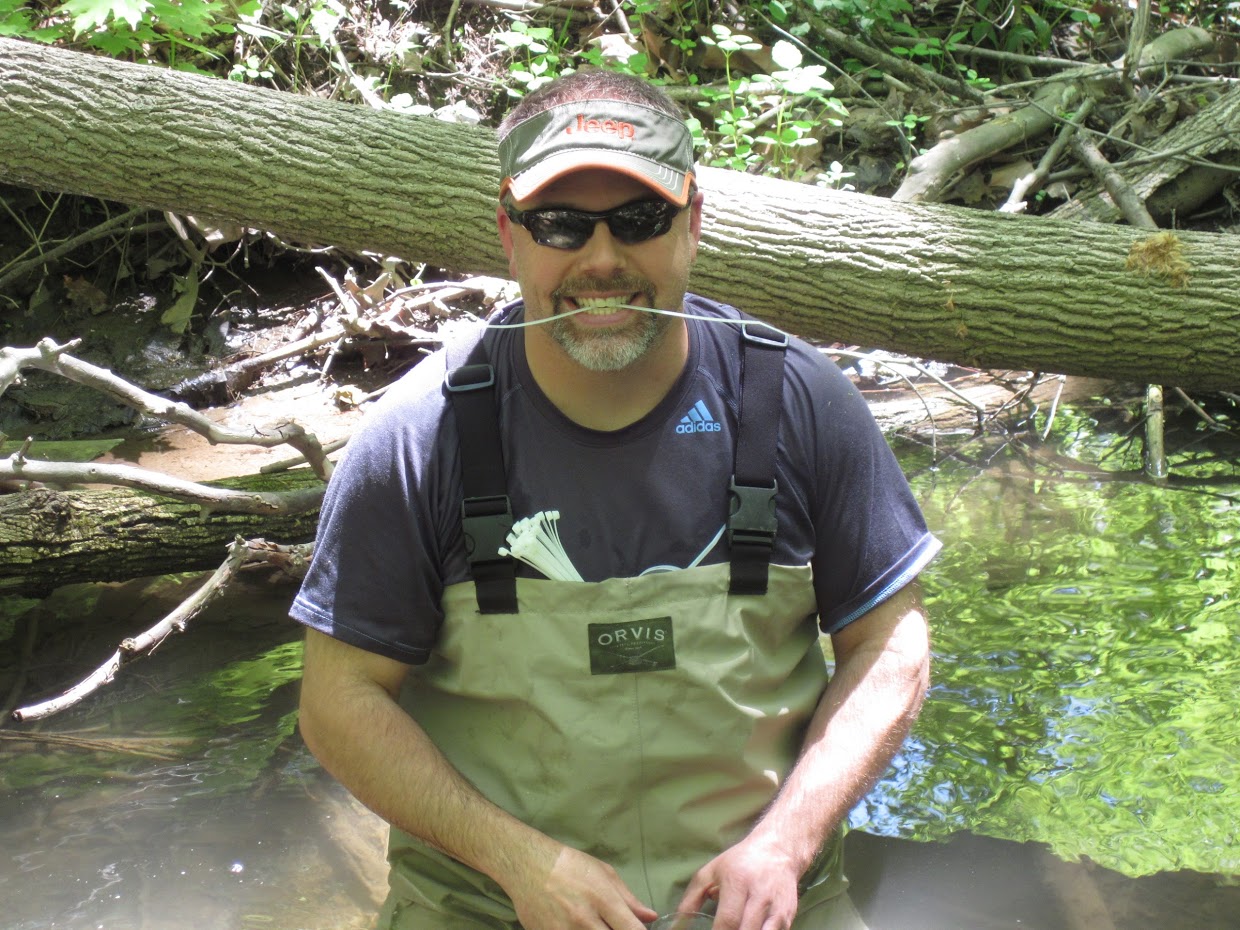
Kevin was a Postdoctoral Associate in the lab working on our NSF grant focused on Amur honeysuckle and streams. He has a PhD from Wright State University where his research focused on ecotoxicology in stream systems focusing on metal pollution of stream benthos. His interest in the lab was applying this ecotox framework to the invasion biology of Amur honeysuckle. He wrapped up work in the lab in March of 2017 an left to take a leadership position at Pace Analytical Laboratory.
Email: kevin.custer@wright.edu
Sarah Alverson
Post-baccalaureate Research Scientist (2009-2010)
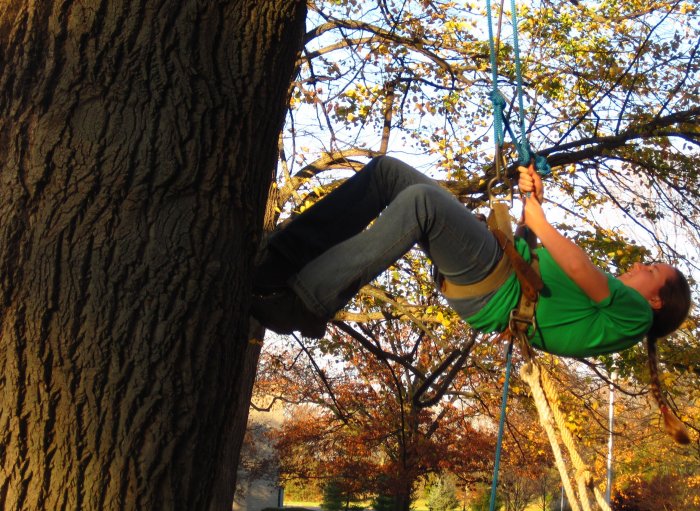
Sarah was part-time technician in the lab who took on a number of challenges. She organized and led project funded by the Five Rivers Metroparks to restore an area invaded by honeysuckle, helped with a series of data analyses, and generally supported all of the ongoing lab activities. Sarah was a crucial part of our community. She left the lab to become a full-time naturalist and educator at Aullwood Audubon Center here in Dayton.
Publication(s) from work in the lab:
McEwan, R,W, M.A. Arthur and S.S. Alverson. 2012. Throughfall chemistry and soil nutrient effects of the invasive shrub Lonicera maackii in deciduous forests. American Midland Naturalist 168: 43–55.
Meredith Cobb
Collaborating Community Partner
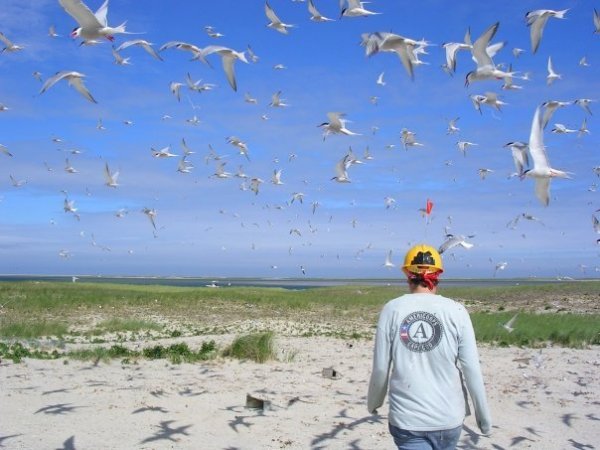
Meredith is a friend of the lab, and collaborator. Her mission is to discover cost effective, methods for restoring forests. She graduated from Antioch College and currently coordinates and participates in conservation efforts for the Five Rivers Metroparks. She is also cofounder of the Manhattan Peace Garden.
Publication(s) from work in the lab:
Cobb, M., M.J. Woods and R.W. McEwan. 2020. Assessing seed handling processes to facilitate a community-engaged approach to regional forest restoration. Forests 11, 474; doi:10.3390/f11040474. Open access: https://doi.org/10.3390/f11040474
Woods, M.J., M. Cobb, K. Hickle and R.W. McEwan. 2019. Assessing the efficacy of seedling planting as a forest restoration technique in temperate hardwood forests impacted by invasive species. Forests 10: 699. Open Access: https://doi.org/10.3390/f10080699
Undergraduate Project Leaders
Abby Hay
BS Environmental Biology 2021
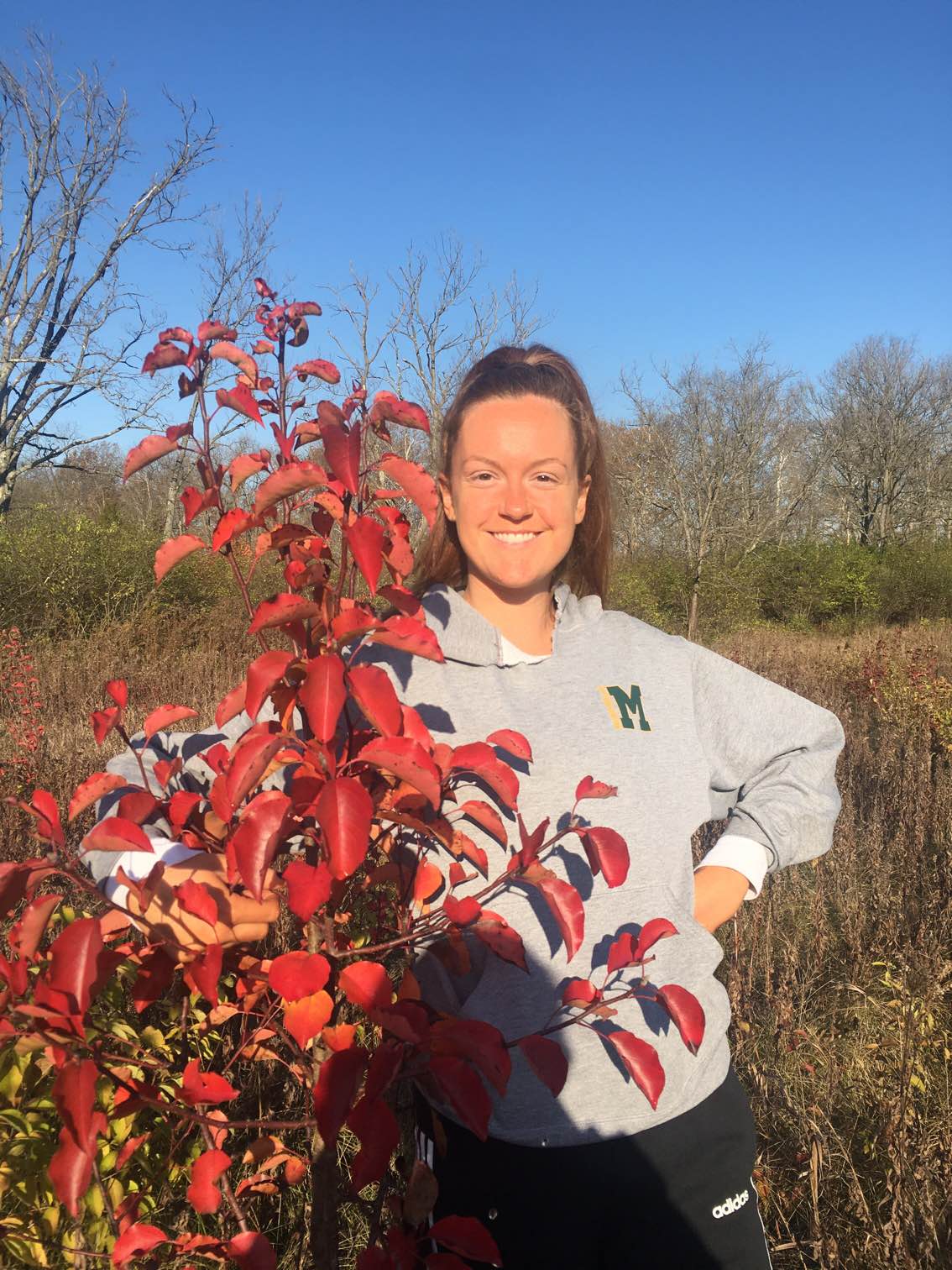
Abby was an Undergraduate Project Leader in the lab and Honors Student. Her Thesis research focused on comparing the vegetative phenology of Callery pear (Pyrus calleryana) with co-occuring native trees. Abby was also the Environmental Biology Program Intern. She was winner of the 2020 Keck Environmental Biology Fellowship!
Honors Thesis: LINK
Publication(s) from work in the lab:
Maloney, M.E., A. Hay, E.B. Borth and R.W. McEwan. 2022. Leaf phenology and freeze tolerance of the invasive tree Pyrus calleryana (Roseaceae) and potential native competitors. Journal of the Torrey Botanical Society 149: 273-279. Open Access: https://doi.org/10.3159/TORREY-D-22-00008.1
Katie Hickle
BS Environmental Biology 2020
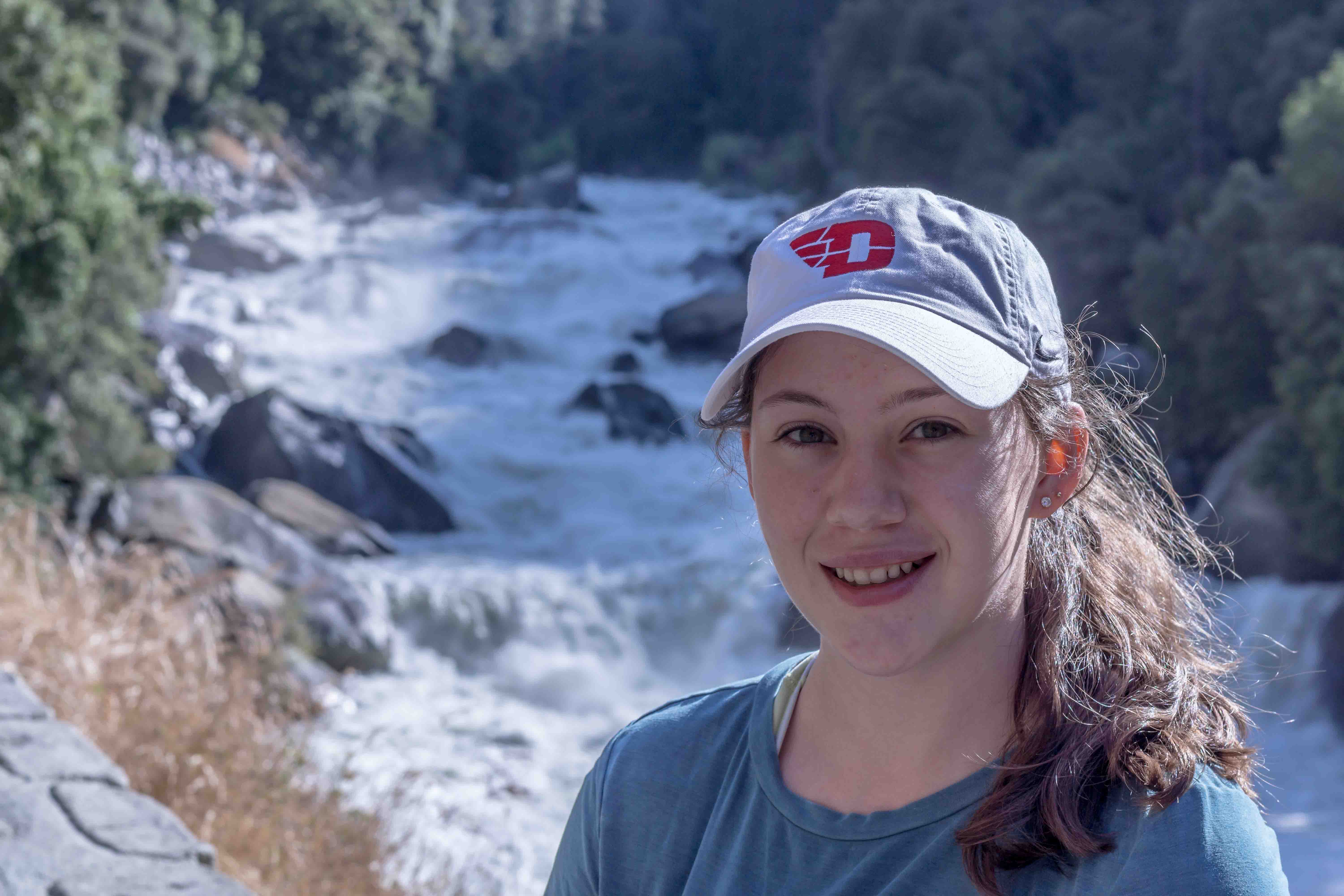
Katie was an Undergraduate Project Leader in the lab who is working with the Five Rivers Metroparks and is interested in forest ecology. She engaged on a project that assessed the efficacy of reforestation as part of ecological restoration in Sugar Creek Metropark.
Publication(s) from work in the lab:
Woods, M.J., M. Cobb, K. Hickle and R.W. McEwan. 2019. Assessing the efficacy of seedling planting as a forest restoration technique in temperate hardwood forests impacted by invasive species. Forests 10: 699. Open Access: https://doi.org/10.3390/f10080699.
Joe Juodvalkis
BS Biology, 2020

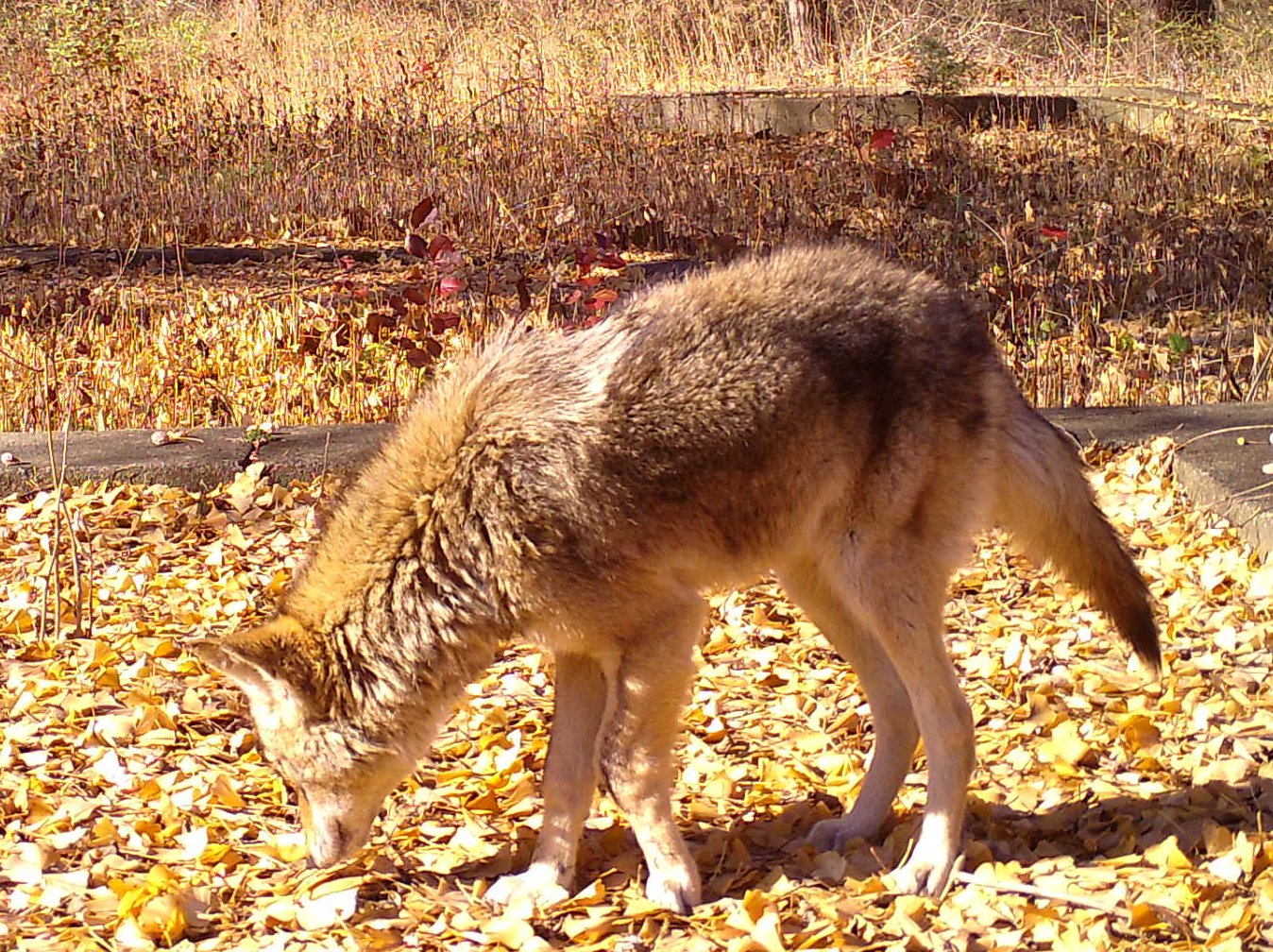
Joe was an Undergraduate Project Leader in the lab who engaged in multiple projects. He has been a stalwart field helper on Michaela Woods’ dissertation research and also helped lead laboratory assays. In addition he was co-leader of a project that sought to ascertain the mammalian fauna of the Environmental Research Area at Old River Park and has, on occasion, taken secret photographs of a coyote named Scott (pictured below):
Publication(s) from work in the lab:
Woods, M.J., S.J. Frankenberg, J.R. Juodvalkis, M.C. Lloyd, M. Cobb and R.W. McEwan. 2022. Oak seedling performance and soil development across a forest restoration chronosequence following agriculture in the American Midwest- a greenhouse experiment. Restoration Ecology 30(5): e13587 LINK.
Michelle Little
BS Environmental Biology, 2020
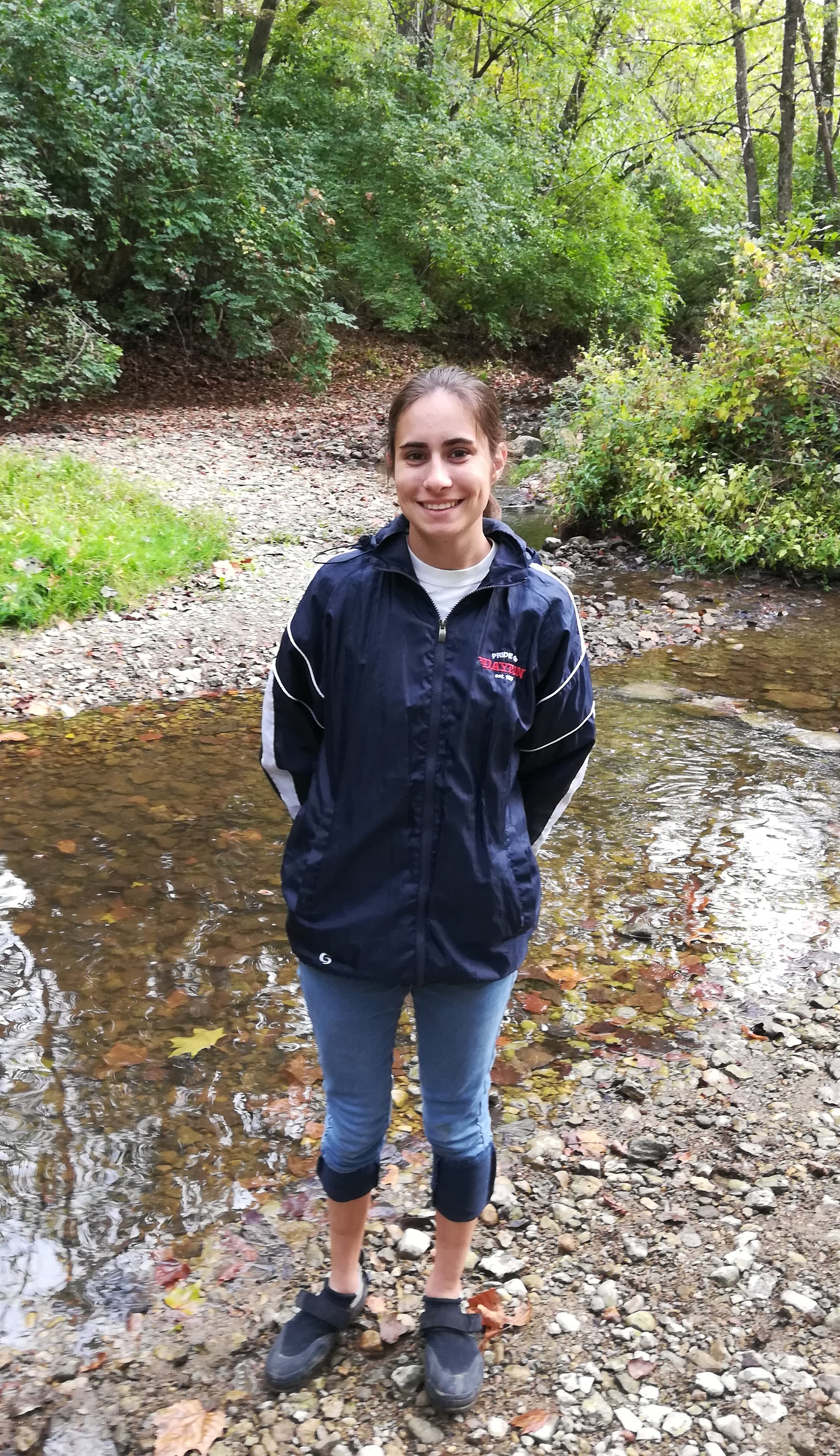
Michelle was an Undergraduate Project Leader in the lab who completed an Honors Thesis in the lab focused on how Amur honeysuckle (Lonicera maackii) influences stream macroinvertebrates. She spent time as the Environmental Biology Program Intern and was a member of the UD Pep Band.
Thesis: LINK
Publication(s) from work in the lab:
Little, M. N., K.W. Custer, E.B. Borth, J.I. Chapman, M.J. Kukla, C. Kuminecz, M.E. Maloney, M.J. Woods and R.W. McEwan. 2021. The influence of riparian invasion by the terrestrial shrub Lonicera maackii on aquatic macroinvertebrates in temperate forest headwater streams. Biological Invasions 23: 25-31. LINK.
Natalie Merline
BS Environmental Biology, 2020
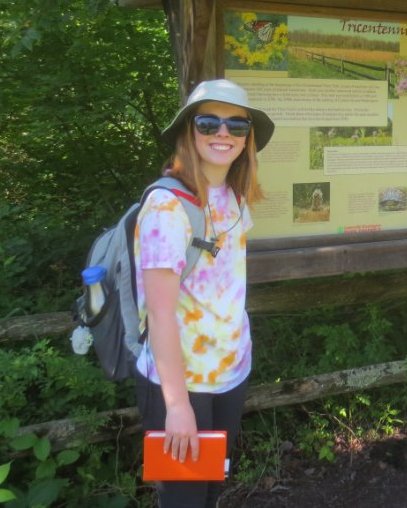
Natalie was an Undergraduate Project Leader in the lab who is led a project focused on urban forests and socioeconomic status in the city of Dayton.
Celia Montemurri
BS Environmental Biology, 2019
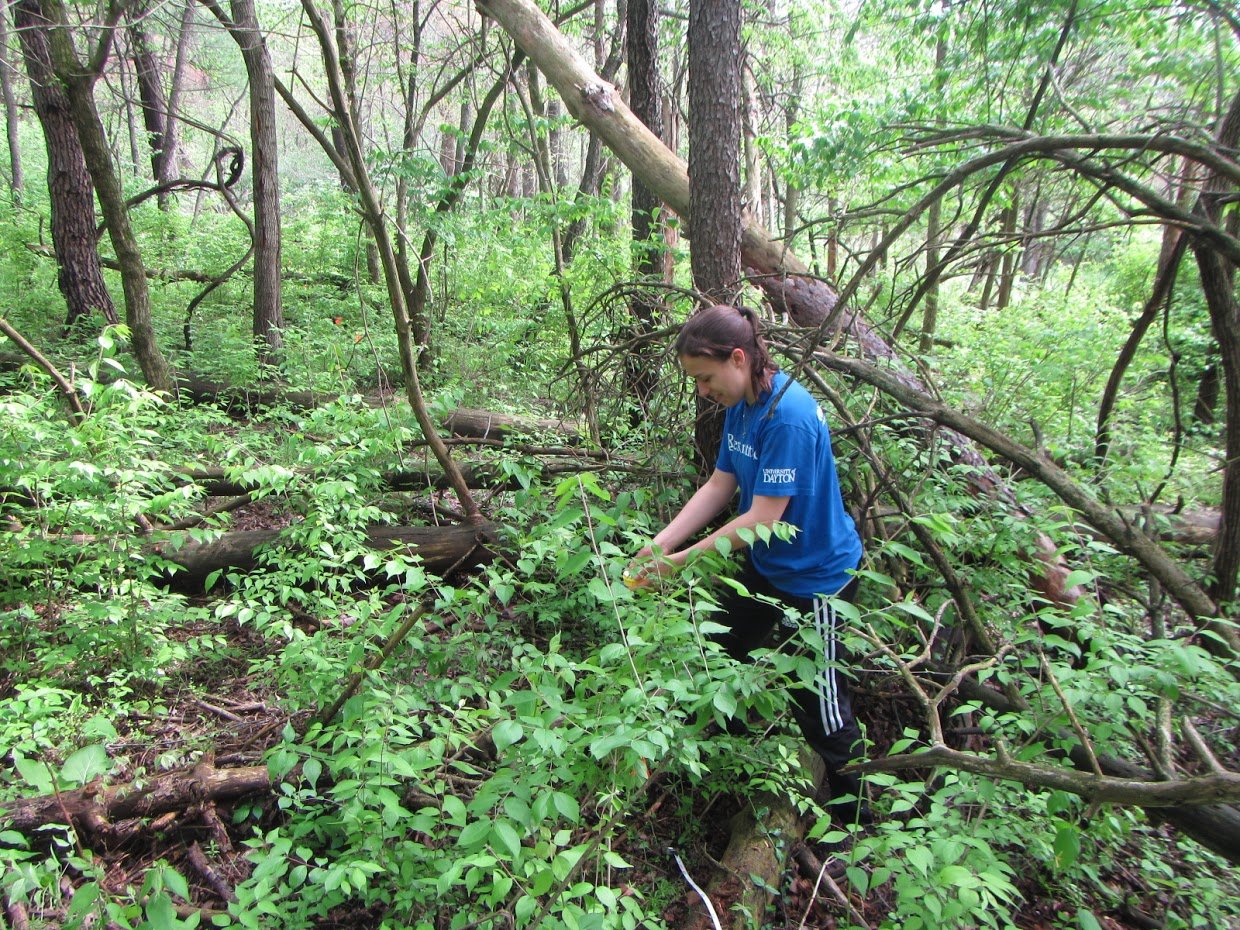
Celia was an Environmental Biology (EVB) major at UD, who is also a river steward and a Sustainability Minor! Celia worked at a bat conservation organization in Chicago and was involved in a project in the lab related to land conservation and management using GIS as part of our Bill Yeck Park vegetation analysis project.
Taylor Sparbanie
BS Environmental Biology, 2019
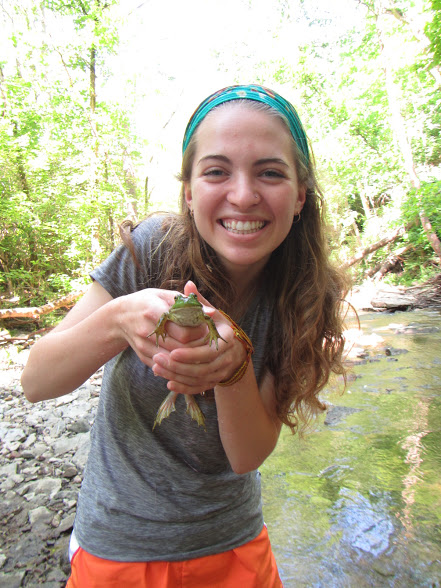
Taylor was an Environmental Biology (EVB) major at UD who was deeply involved in research leadership in the lab during her time at UD. In the summer of 2017 she was a Fellow in the lab working on the Bill Yeck project and participated in a host of other research and training activities. Taylor was an Honors Student whose Thesis focused on forest ecology and conservation in Bill Yeck Park. She departed UD and completed a Masters Degree at Ohio University in the laboratory of Dr. Rebecca Snell.
Honors Thesis: LINK
Taylor Buskey
BS Biology, 2018
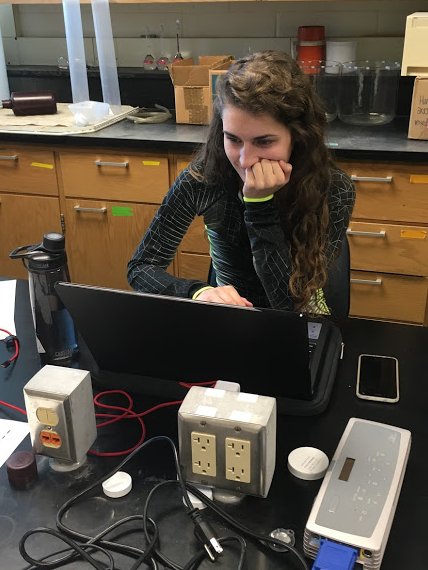
Taylor was an Undergraduate Project Leader in the lab who did an Honors Thesis that focuses on the herb layer at Drew Woods Nature Preserve in Darke County OH. This is an old-growth wet woods that has recently undergone two significant perturbations- garlic mustard invasion and removal, and the loss of ash trees due to the Emerald Ash Borer. Taylor graduated and joined the MS program at Indiana University- SPEA.
Honors Thesis: LINK
Publication(s) from work in the lab:
Buskey, T.M., M.E. Maloney, J.I. Chapman and *R.W. McEwan. 2020. Herb-layer dynamics in an old-growth forest: vegetation-environment relationships and response to invasion-related perturbations. Forests 11: 1069. Open access: https://doi.org/10.3390/f11101069.
Mitch Kukla
BS Environmental Biology, 2018
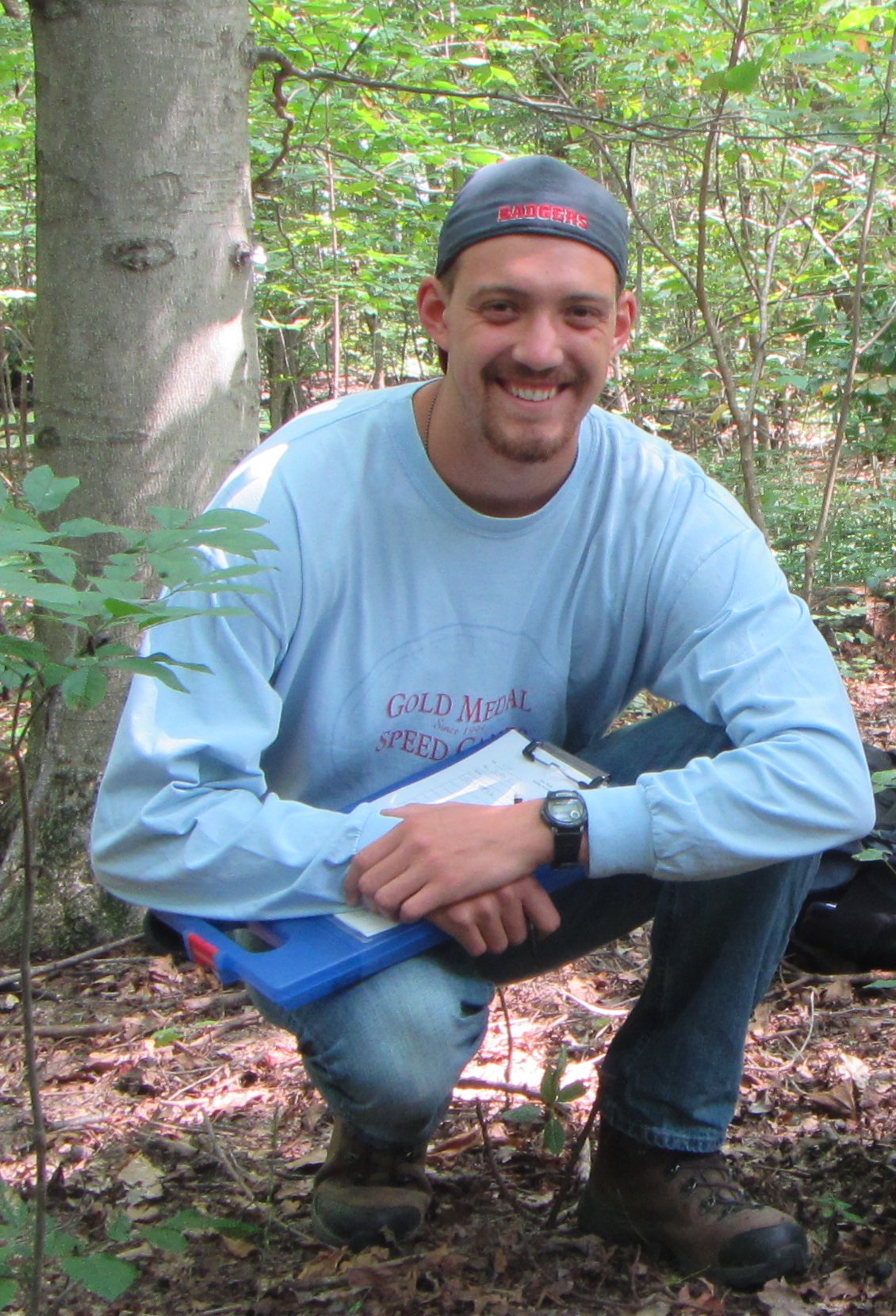
Mitch is an Undergraduate Project Leader in the lab who has been incredibly engaged in the function of the lab for several years! He has worked full-time in the lab on the Amur honeysuckle NSF project and on our City of Dayton project. Mitch is co-leading macroinvertebrate sampling for our honeysuckle project, and launching a new vegetation sampling project with Corey Kuminecz. He worked full time on a project at Bill Yeck park near Dayton during the summer of 2017.
Corey Kuminecz
BS Environmental Biology, 2018
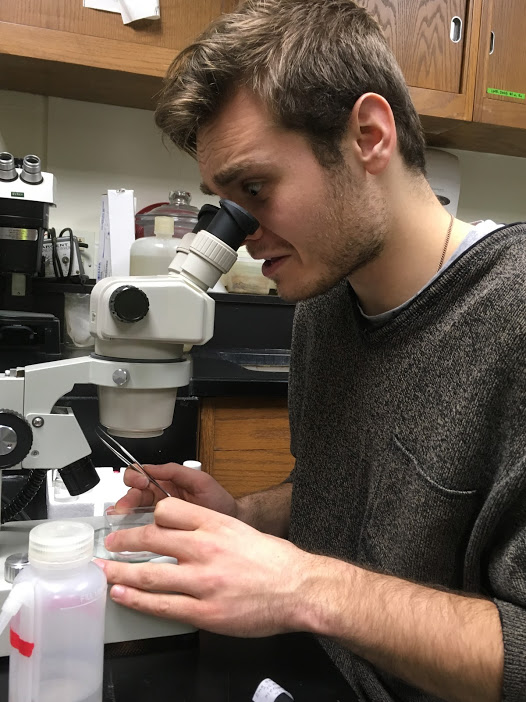
Corey was an Undergraduate Project Leader in the lab who is engaged in a variety of projects. He has worked full-time in the lab on the Amur honeysuckle (Lonicera maackii) NSF project and on our City of Dayton project. Corey was co-leader of macroinvertebrate sampling for our honeysuckle project and did a large amount of the sample processing for that project. In addition, he worked on an herb layer project related to the NSF Lonicera project and an overstory vegetation sampling of Drew Woods an old-growth forest in Ohio. He was a Human Rights minor and has interests in thinking about linking environmental quality and sustainable human societies. He spent part of the summer of 2017 in Malawi working on a sustainability project. Corey left the lab to join the Notre Dame ACE teaching fellows program: LINK.
Meg Maloney
BS Environmental Biology, 2018
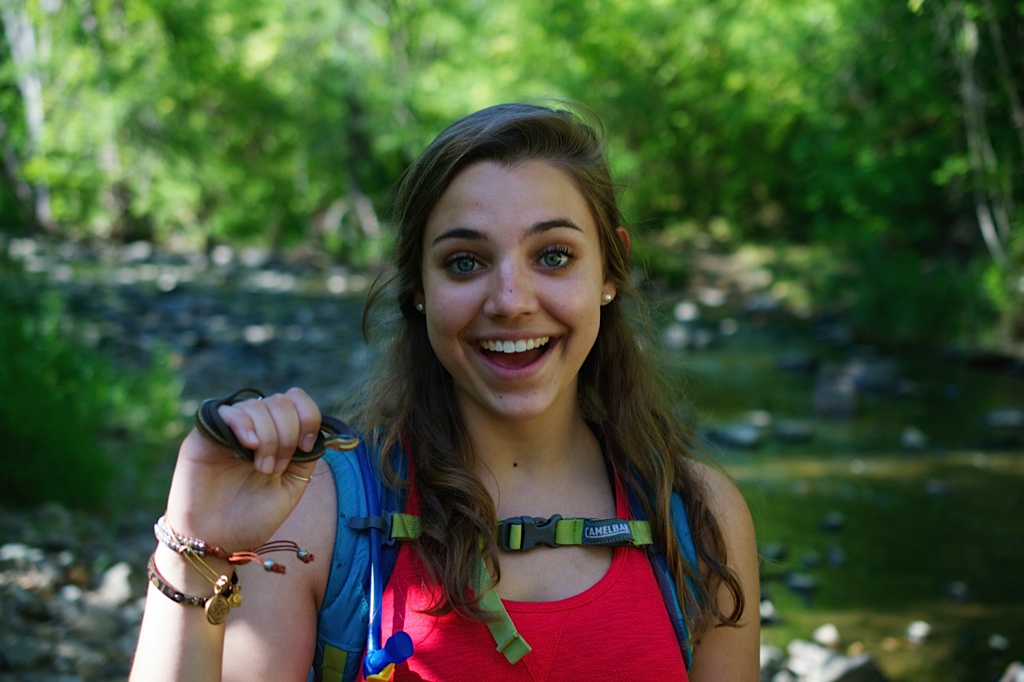
Meg was a project leader and Honors student in the lab. She was incredibly involved with the campus community at UD, minoring in sustainability, energy and the environment, participating in the Rivers Stewards program and working as a Sustainability Intern with the Hanley Sustainability Institute. Meg started working in the lab for Rachel McNeish during her first semester freshmen year. She assisted with chlorophyll analysis on NDS samples. On the weekends, Meg studies restoration ecology in native ecosystems the Dayton area. Meg also enjoys “herping” or looking for reptiles and amphibians in her free time. Meg’s research in the lab included developing a new technique for sampling salamanders in headwater streams and assessing the role of Lonicera maackii invasion on the herbaceous community in forests near Ohio. During her time at UD Meg spent time in both India and China. She left the lab to become a naturalist an educator at Mount Harmon nature center in the redwood forests of California and later returned as a graduate student (see above).
Honors Thesis: LINK
Publication(s) from undergraduate work in the lab:
Maloney, M.E., E.B. Borth, C. Skalski and R.W. McEwan. 2020. Development of a new habitat mimicking tool for assessing larval salamanders in temperate forest streams. Natural Areas Journal 40: 318-325. LINK.
Eric Borth
BS Biology, 2017
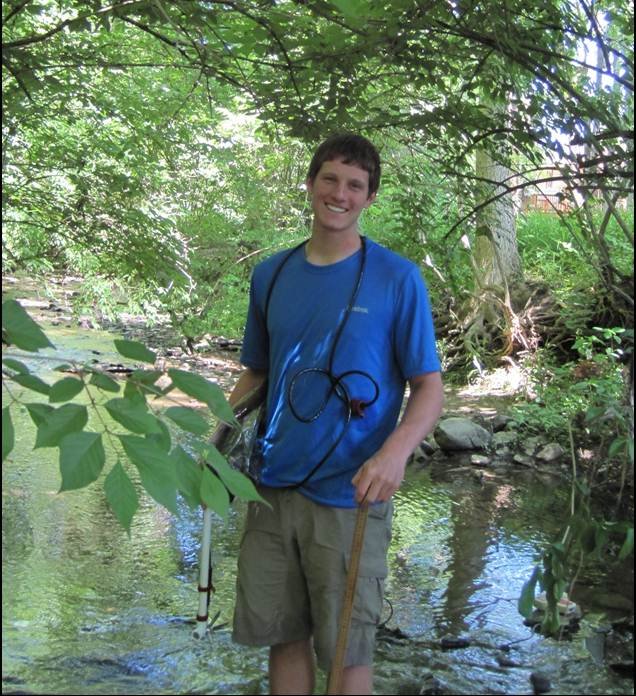
Eric was an Undergraduate Project Leader and Honors Student in the lab. He started working in the lab at the beginning of his freshman year, acid washing glassware, sorting leaf samples, and performing nutrient analysis on water samples and chlorophyll analysis on NDS samples. He took on a leadership role over two summers working on the National Science Foundation funded experiment investigating the effects of invasive plants on stream ecosystem biodiversity. His Honors Thesis project involves using microcosms to understand the influence of Lonicera maackii on aquatic invertebrates. He transitioned into the McEwan lab as a graduate student (see above)!
Honors Thesis: LINK
Publication(s) from undergraduate research in the lab:
Borth, E.B., K.W. Custer, K.W. and R.W. McEwan. 2018. Lethal effects of the non-native invasive shrub Amur honeysuckle (Lonicera maackii) leaf leachate on a model aquatic organism (Hyalella azteca). EcoScience 25: 189–197.
Custer, K.W., E.B. Borth, S.D. Mahoney and R.W. McEwan. 2017. Lethal and sublethal effects of novel terrestrial subsidies from an invasive shrub (Lonicera maackii) on stream macroinvertebrates. Freshwater Science 36: 750-759. Open Access: http://www.journals.uchicago.edu/doi/full/10.1086/694895
Charlotte Shade
BS Biology, 2017
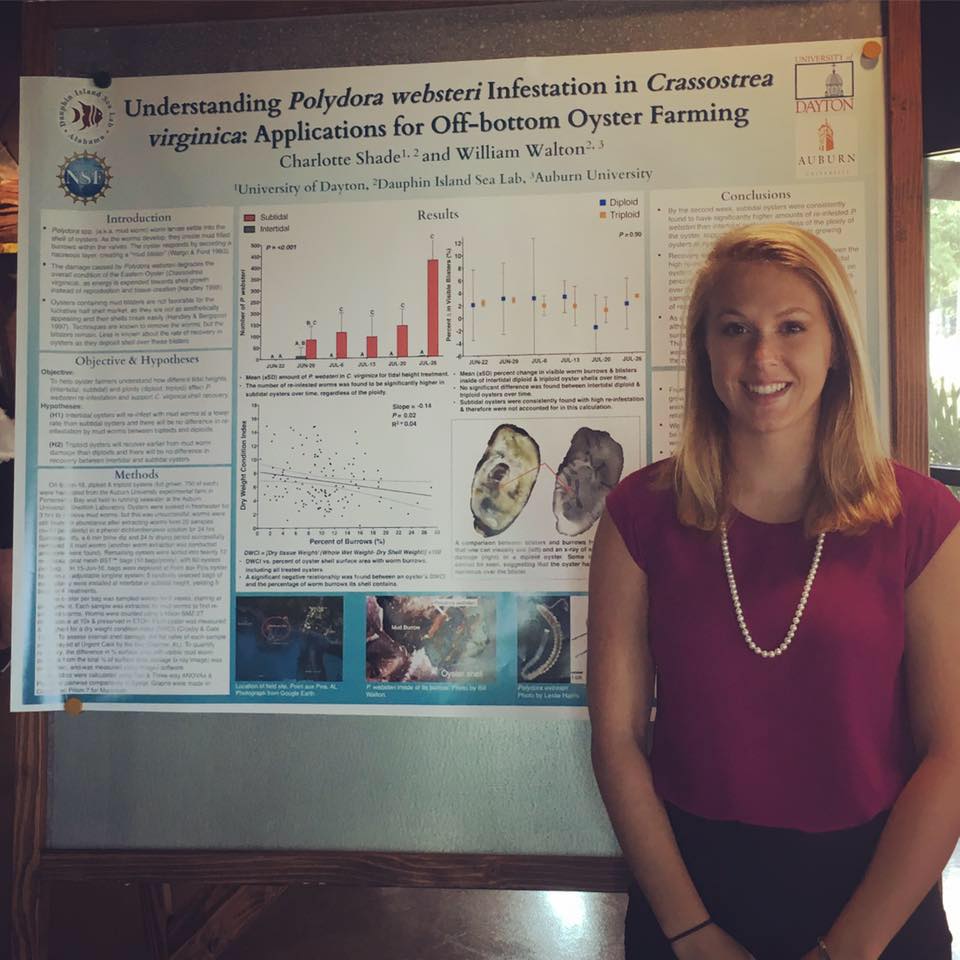
Charlotte is a senior at UD studying Biology with a minor in Sustainability, Energy and the Environment, and a GIS certificate. She started working in the lab in the first semester of her freshman year. She is Honors Student in the lab pursuing an honors thesis. She has worked with Rachel McNeish on research concerning how Lonicera maackii impacts organic matter distribution in streams, and she has assisted Dr. McEwan on the Soil microbial effects on temperate forests following invasion project. Currently, she is conducting an honors thesis concerning how a gradient of Amur honeysuckle effects the nutrient cycles in riparian stream ecosystems. In the summer of 2016 she received an REU at Dauphin Island Sea Lab to study oysters. Next year she plans to pursue a master’s degree in environmental science and policy. Her goal is to work for a public agency or non-profit to work on environmental policy and science literacy programs in America.
Honors Thesis: LINK
Angela Giaquinto
BS Biology, 2016
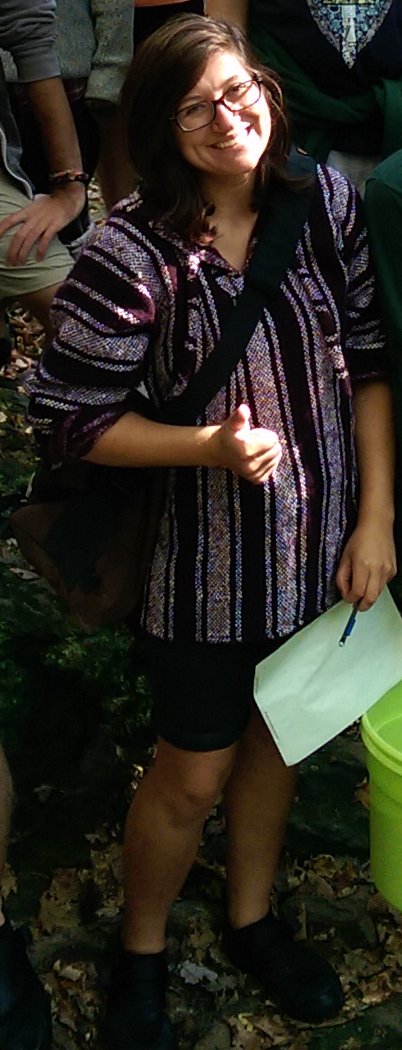
Angela was an Honors Student and Undergraduate Project Leader in the lab who was responsible for creating a whole new vein of research in the lab: urban pollinators! Her thesis project focused on land-use and pollinators in Dayton, Ohio. She left UD and headed to Emery University to join the Masters of Public Health program.
Honors Thesis: LINK
Sarah Frankenberg
BS Biology, 2015
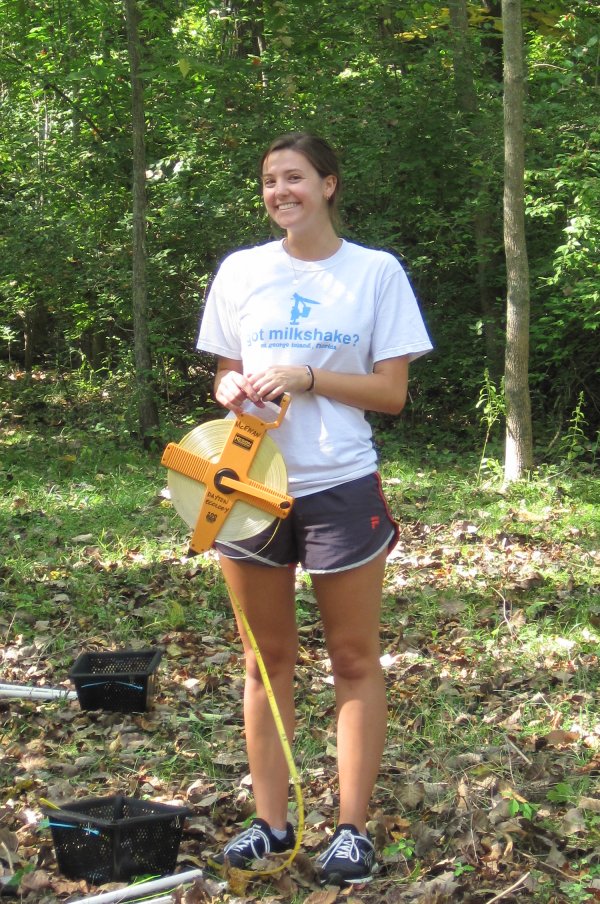
Sarah was an Undergraduate Project Leader in the lab who was the backbone of our NSF crew for two summers! She did an amazing job organizing our field site recon efforts and, in fact, became the “go to” person for both McEwan and post-doc Kevin Custer when it came to site-related issues! Also led a project that looked at the deposition of leaf materials in a forest invaded by Lonicera maackii. She left the lab and took a position as an intern at the Dauphin Island Sea Lab!
Lauren Shewhart
BS Biology, 2014
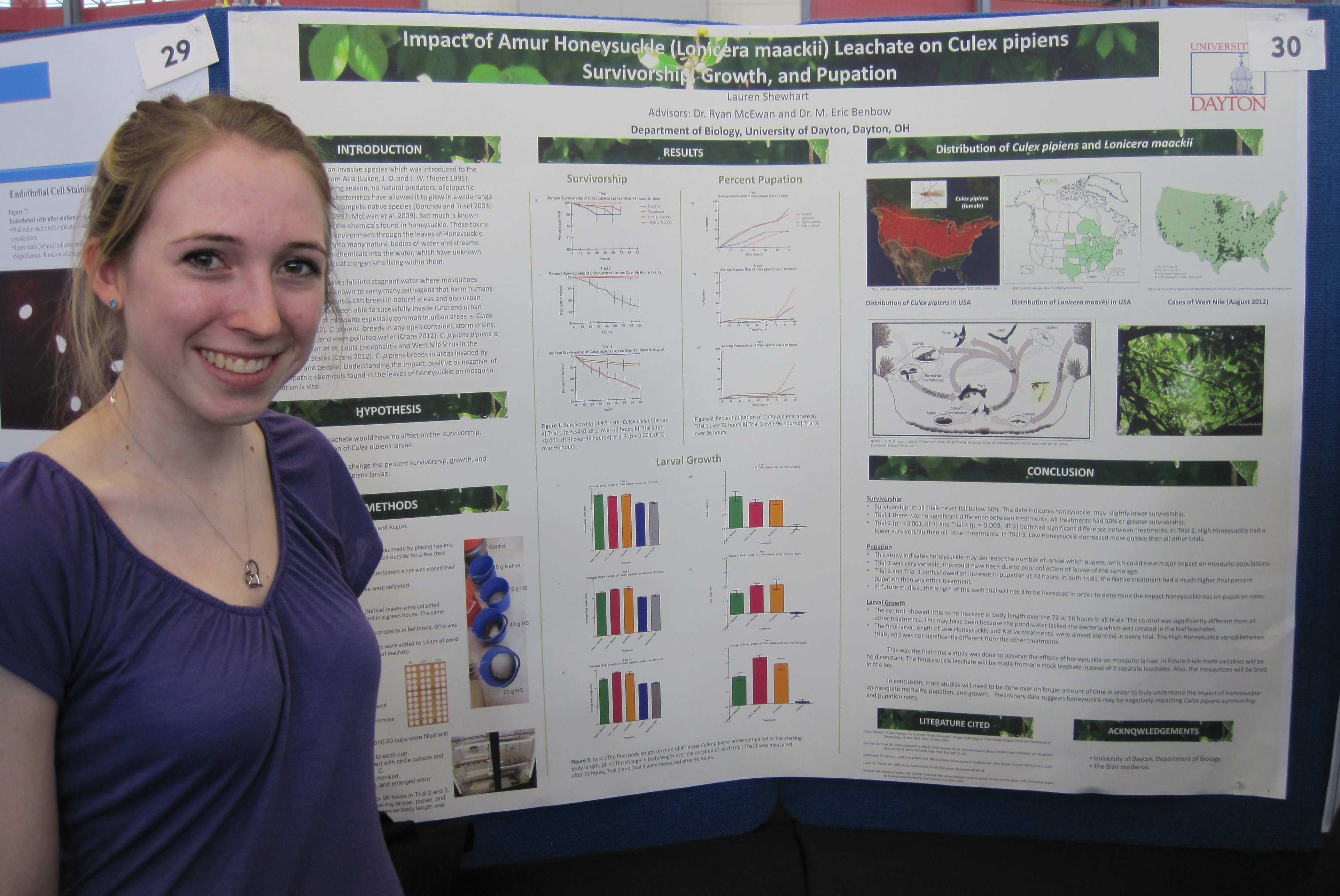
Lauren was an Undergraduate Project Leader and Honors Student who was co-advised by McEwan and Dr. Eric Benbow (now at Michigan State University) on a project that focused on how Amur honeysuckle influenced mosquito abundance. The project was microcosm-based and led to a nice publication (see below). After she graduated, Lauren joined the laboratory of Dr. Don Cipollini from Wright State University where she launched a MS project.
Honors Thesis: LINK
Publication(s) from work in the lab:
Shewhart, L., R.W. McEwan and M.E. Benbow. 2014. Evidence for facilitation of Culex pipiens (Diptera: Culicidae) life history traits by the non-native invasive shrub Amur honeysuckle (Lonicera maackii). Environmental Entomology 43: 1584-1593.
Courtney Dvorsky
BS Biology, 2014
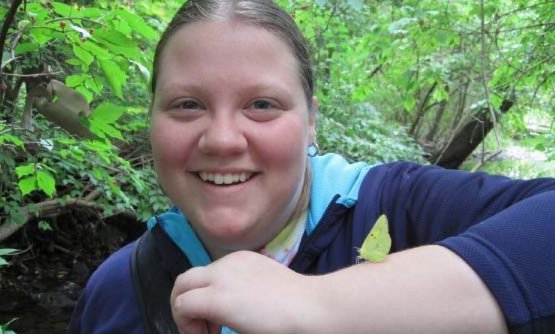
Courtney began working in the lab in the spring 2012, starting off sorting surber samples and conducting aquatic ecology field work. She was an Undergraduate Project Leader on a project that addressed nutrient limitation in streams in relation to Lonicera maackii invasion and she also worked on a lab project in collaboration with Dr. Don Cipollini from Wright State University, studying the impact of Lonicera maackii’s allelochemical effects on soil and native plant species. Courtney graduated in May 2014 and began a MS project at St. Louis University working in the lab of Dr. Peter Bernhardt and Dr. Retha Meier focusing on the pollination of milkweed plants by Monarch butterflies.
Grace Willkomm
BS Biology, 2014
Grace loves the outdoors and aspires to save the human race. She is multi-talented and created the lab logo! Grace was an Undergraduate Project Leader in the lab as she worked on an environmental education project with Aullwood Audubon Center and Farm. Her project was dendrochronology based and she did such an amazing job they continue to use her ideas. She left UD and worked at the Cincinnati Zoo for a time and then enrolled in an RN (nursing) program!
Charlie Jackson
BS Environmental Biology, 2013

Charlie was involved in the lab as an assistant on Rachel McNeish’s project and then became an Undergraduate Project Leader as he led independent project focused on Emerald Ash Borer at the Cox Arboretum. He spent summer of 2011 summer working in the Hoosier National Forest in an summer tech position associated with Dr. Michael Jenkins. He left UD and headed south to the University of Alabama where he completed a Master of Science in Forest Ecology.
Amy Myers
BS Biology, 2013
Amy was a double major in Education and Biology and an Undergraduate Project Leader. She spent time working on a variety of projects, including helping to get an herbarium up and running. Amy then helped to lead a project that assessed vernal herb dynamics in Drew Woods, an old-growth wet forest in SW Ohio. She was also the resident cave expert and worked leading tours of Ohio Caverns for several years. Amy left the lab and achieved her dream with a job as a teacher at Piqua High School.
Publication(s) from work in the lab:
Chapman, J.I., A.L. Myers, A. J. Burky and R.W. McEwan. 2015. Edge effects, invasion, and the spatial pattern of herb-layer biodiversity in an old-growth deciduous forest fragment. Natural Areas Journal 35: 439-451.
Anastasia Stolz
BS Environmental Biology, 2013
 Anastasia demonstrated unbelievable creativity in her role as an Undergraduate Project Leader in the lab because her research project was outside of the general area of expertise in the lab! She focused on the environmental microbiology of plant invasion. She demonstrated high levels of skills in various microscopy methods and worked in the lab doing aquatic entomology. She spent one summer in an internship at Cedar Creek Ecosystem Science Reserve. Anastasia left the lab and joined a graduate program at Duquesne University.
Eryn Moore
BS Environmental Biology, 2012
Eryn worked on a variety of projects in the lab and was an Undergraduate Project Leader on a stream restoration project in association with PhD student Rachel McNeish. She received funding from Learn, Lead and Serve at UD to head a native species restoration effort in a stream riparian zone. She worked with the Centerville-Washington Township Parks in this project. Eryn also spent the summer of 2011 working as an intern at the Cleveland Botanical Garden. Eryn left the lab and moved to Charleston West Virginia where she works as a supervisor in a wastewater treatment facility.
Publication(s) from work in the lab:
McNeish, R.E., E.M. Moore, M.E. Benbow and R.W. McEwan. 2015. Removal of the invasive shrub, Lonicera maackii, from riparian forests influences headwater stream biota and ecosystem function. River Research and Applications 31: 1131-1139. LINK.
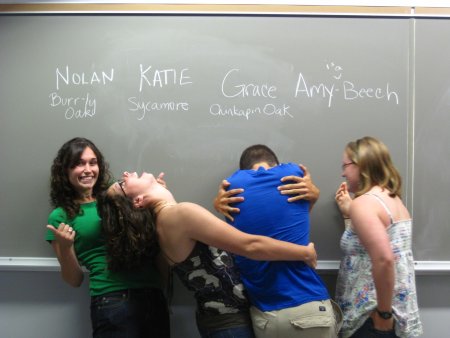
The Founding Quartet
The following four folks were founding members of the lab who were all Undergraduate Project Leaders. Nolan and Grace came first, then Amy and Katie. They helped launch the lab and were immensely influential in the success of the lab because they formed an inspiring community.
Amy Hruska
BS Environmental Biology, 2011
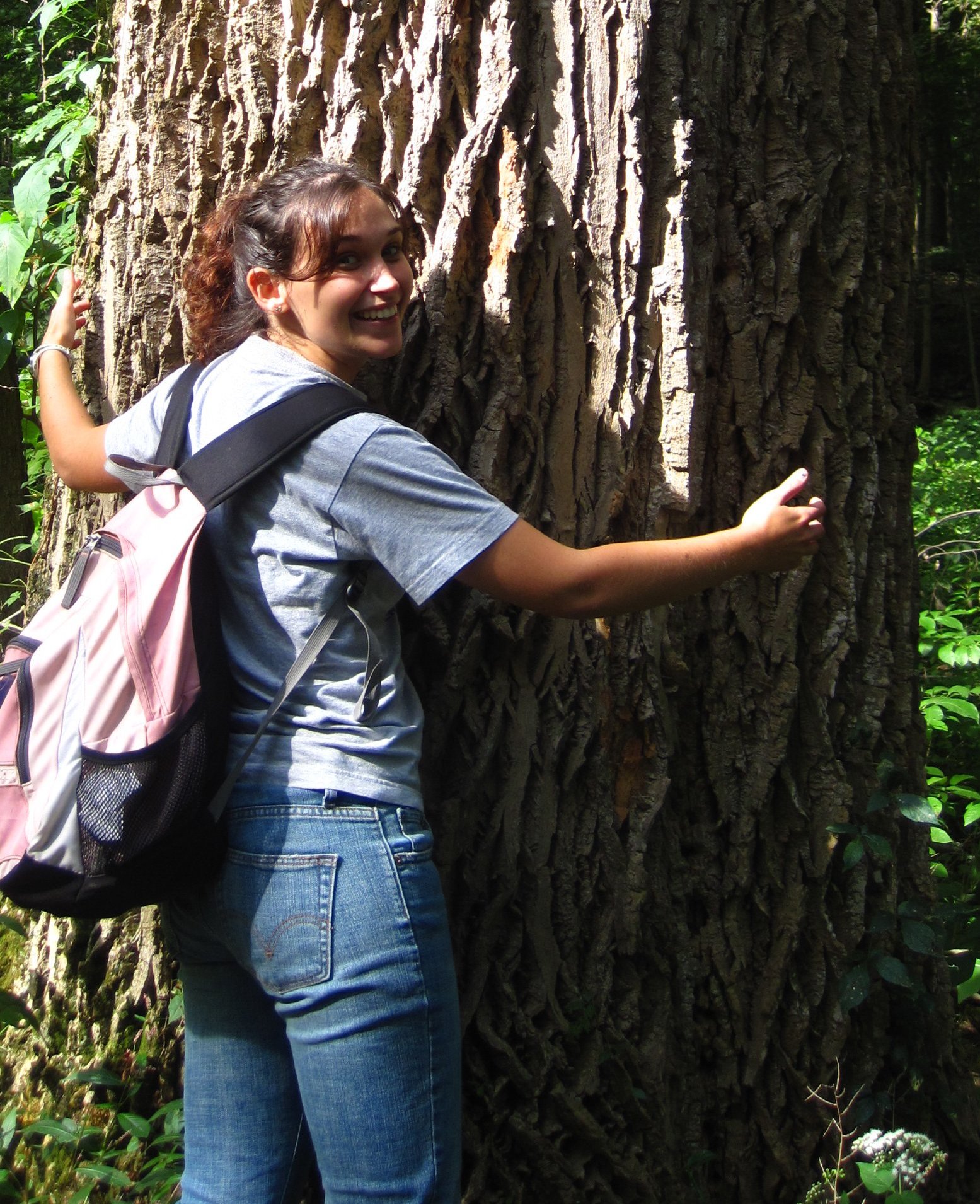
Amy was an Undergraduate Project Leader in the lab who envisioned and led an independent research project on the ecology of plant invasion in a variety of old-growth forests in Ohio and Kentucky. She also worked on a separate project in collaboration with the Five Rivers Metroparks to understand the process of restoring sites heavily invaded by honeysuckle. She graduated with a BS in Environmental Biology and also a GIS certificate. Amy left UD and went to West Virginia University where she completed a MS in Forest Ecology in the laboratory of Dr. Jim McGraw.
Publication(s) from work in the lab:
McEwan, R.W., N. Pederson, A. Cooper, R. Watts and A.M. Hruska. 2014. Fire and canopy disturbance over 300 years in an old-growth temperate. Applied Vegetation Science 17: 312-322.
Grace John
BS Biology, 2011
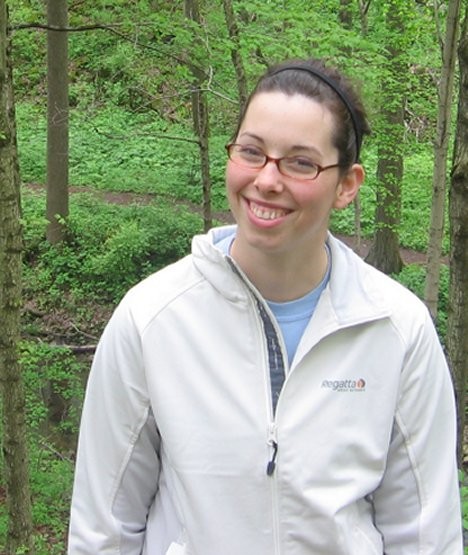
Grace was an Undergraduate Project Leader in the lab who actually led two projects! She is co-author on an analysis of flowering phenology change associated with climate warming in southwestern Ohio (see below). She also worked on a project focused on forest formation and dynamics in sections of Germantown Metropark here in Dayton. For that project she received funding from Learn, Lead and Serve at UD and along with RWM also got funding from the Five Rivers Metroparks and from SEE at UD…meaning she funded her own research project. In the summer of 2010, she was awarded an REU position at the BioSphere 2 project. Grace left UD and headed to UCLA to work toward a PhD in the laboratory of Lauren Sack. She is presently a faculty member at the University of Florida.
The Grace John Lab Website: LINK
Publication(s) from work in the lab:
McEwan, R.W., R.J. Brecha, D.R. Geiger and G.P. John. 2011. Flowering phenology and climate warming in southwestern Ohio. Plant Ecology 212: 56-61.
Nolan Nicaise
BS Biology, 2011
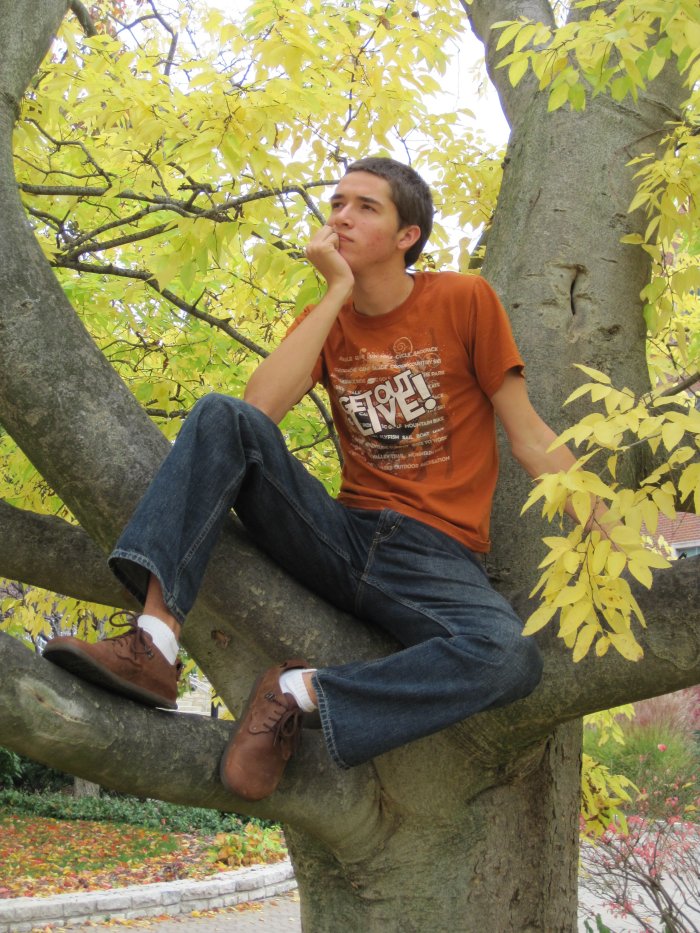
Nolan was one of the founding quartet who was also an Undergraduate Project Leader and Honors Student in the lab. He joined the lab in October 2008 and McEwan started the lab in August of 2008! Nolan was recipient of a Learn, Lead and Serve Award with which he developed a tree-trail here at UD and he worked on a historical ecology project using cabin samples. He spent the spring of his junior year in France and the following summer in Appalachia. His Honors Thesis project was an analysis of the spatial distribution and socioecological implications of urban greenspace in the Dayton metro area. Nolan left UD and completed a year of service with Colorado Youth for a Change, a non-profit organization committed to solving Colorado’s high school dropout crisis. He then began a Master’s Degree in Urban and Environmental Policy and Planning at Tufts University.
Honors Thesis: LINK
Katie Norris
BS Environmental Studies, 2010
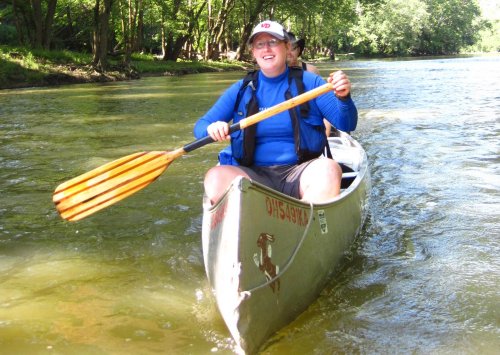
Katie was an Undergraduate Project Leader in the lab and also an Honors Student in the lab. Her Honors Thesis was a project that sought to understand the relationship between regional land use and the ecological integrity of the Great Miami River. She assembled a research flotilla and completed two 5-day, ~60 mile paddling trips from Indian Lake to Dayton sampling the river along the way. She left the lab and joined the lab of Kevin Simon at the University of Maine where she finished her Master’s degree in May 2012. Katie next worked in the laboratory of Dr. Amy Rosemond at the University of Georgia focusing on a nutrient addition project at Coweeta Hydrological Laboratory. She is currently an environmental scientist working for the City of Dayton Water Department. And, in a wonderful turn of events, Katie is now reconnected to the lab as we are partnering with the city to understand land-use effects on stormwater!
Honors Thesis: LINK
In addition to these Graduate Students and Undergraduate Project Leaders, a host of wonderful and inspiring people have helped out in the lab in various ways. Some were quite involved, others just passing through. They made a difference and we cherish their contributions and participation in our community.
Here is a comprehensive list of all undergraduates who have been involved in the McEwan Lab: LIST
 The McEwan Laboratory